By Off Path Now · Updated
A pine changes the whole view
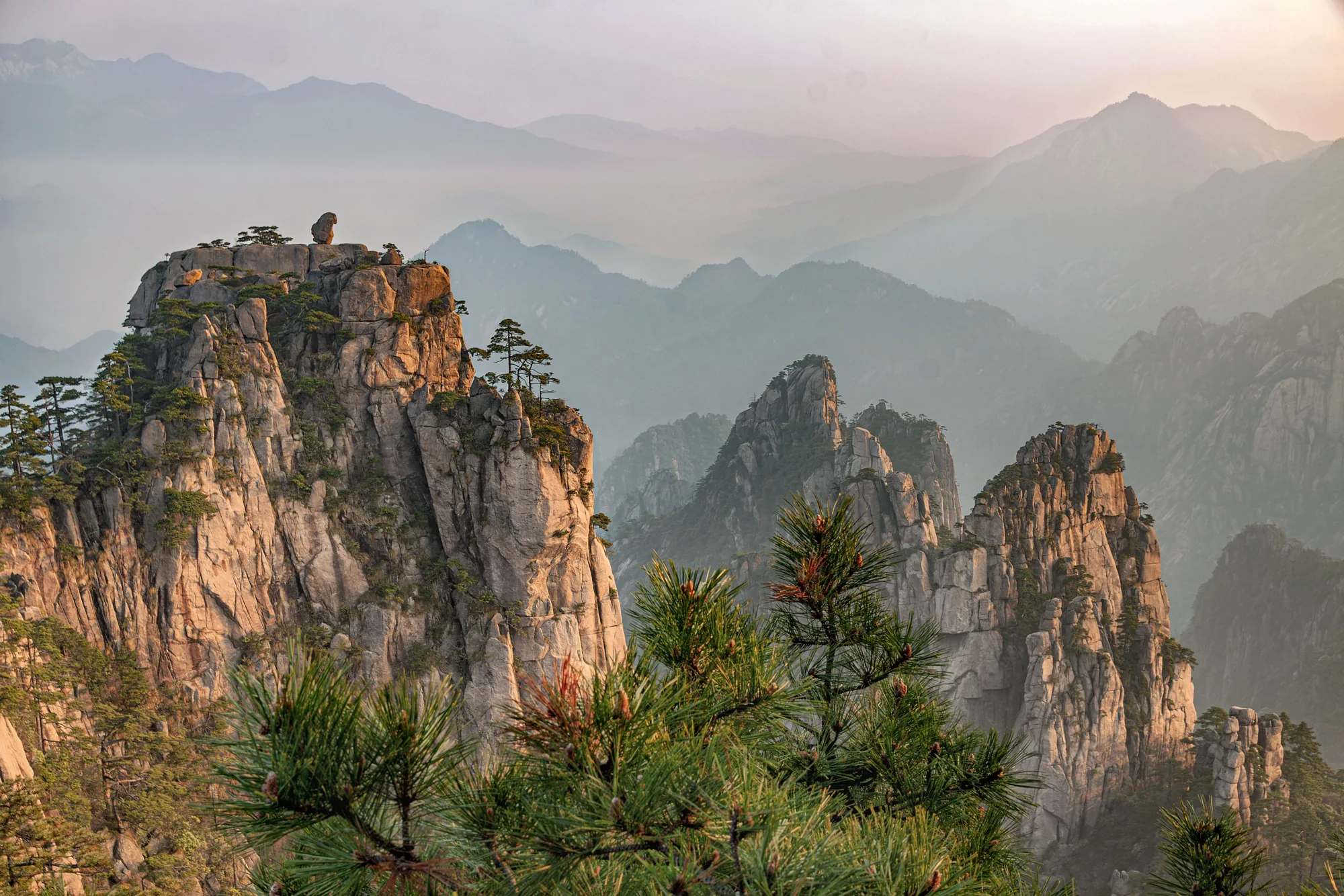
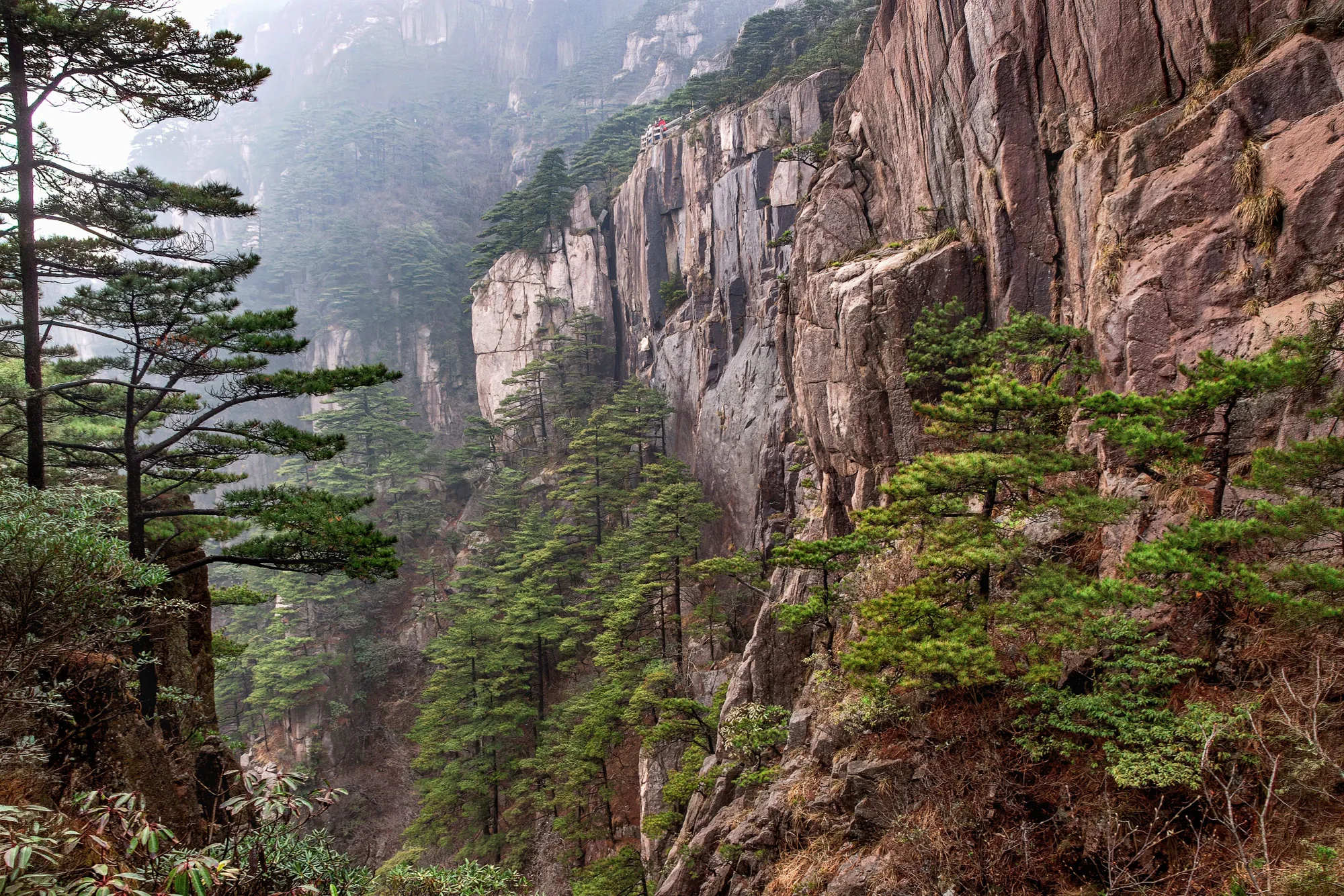
At Huangshan, begin with the outline of a tree. A branch reaches across open space; needles gather into a dark plane; behind it, the granite drops away. The eye follows that small, irregular line before taking in the mountain. Scale arrives gradually. What first seemed a distant ridge becomes a succession of surfaces, each with its own angle to the light.
This is a rewarding way to meet the mountain: choose a view and give it a little time. Look from the pine to the rock, then towards the space between the peaks. A photograph may bring these elements together instantly. Standing there allows their relationships to unfold.
Learning to see a painted mountain
Huangshan’s place in Chinese visual culture gives this looking another dimension. UNESCO describes its enduring influence on Chinese art and literature, including landscape painting. The granite, pines and intervals of mist offer a way into that connection without requiring specialist knowledge.
Think about the space left unpainted in an ink landscape. It can suggest distance, cloud or an opening for the imagination. On the mountain, try attending to the gaps as carefully as the solid forms. A pale interval between two ridges may hold the composition together. The pleasure lies in discovering a visual language through the landscape that helped inspire it.
Let the weather remain part of the story
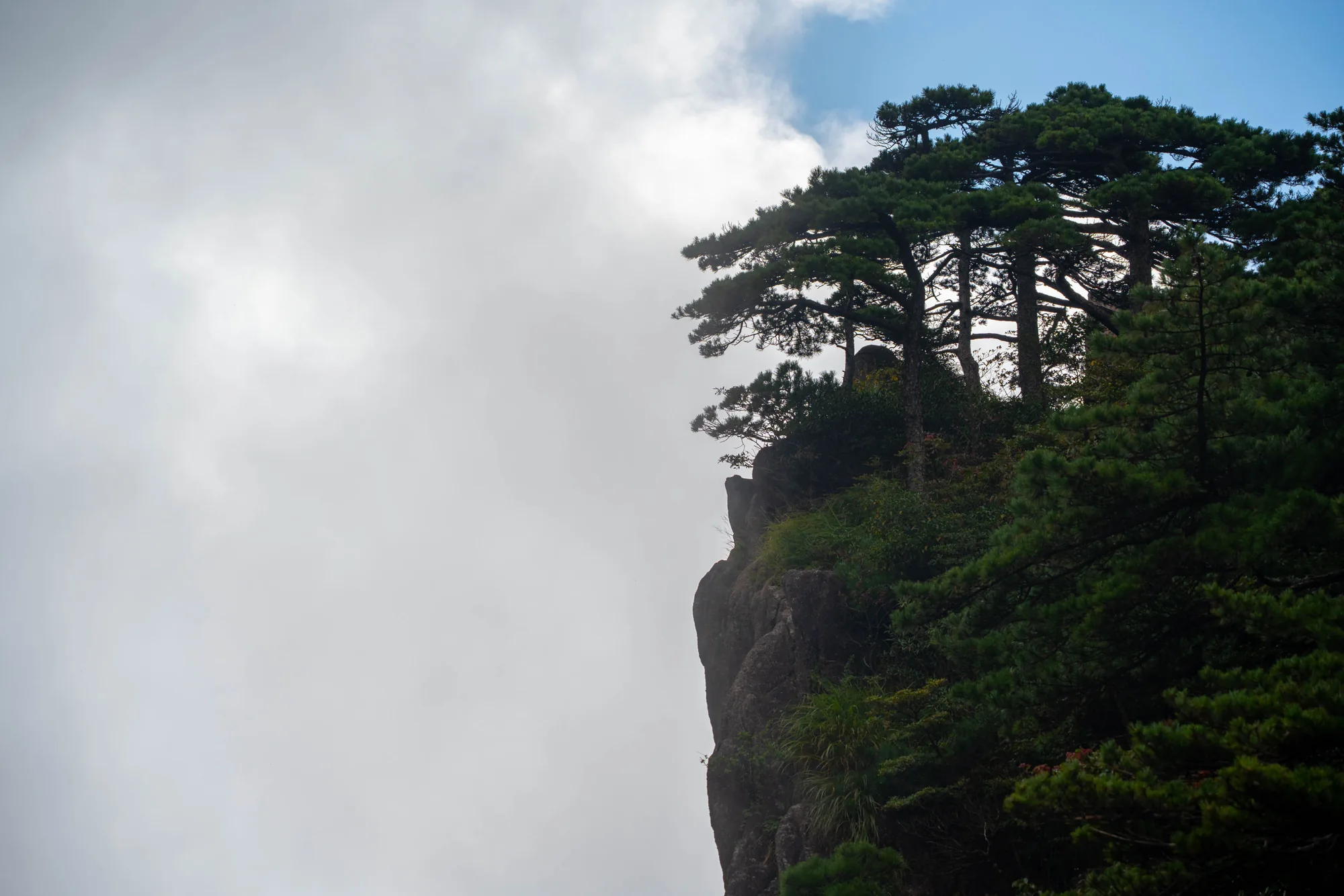
Mist can conceal a ridge and leave a nearer branch unusually clear. Brighter conditions can reveal the architecture of the rock, the folds and breaks that a cloudier view dissolves. Each asks for a different kind of attention. The celebrated sea of clouds is a possibility; sunrise colour and open views also depend on conditions.
Build the journey around being on the mountain, with some freedom to respond to the day. A pause can be as valuable as reaching another viewpoint. Even when a distant panorama stays hidden, there is texture nearby: the edge of a slab, a pine’s silhouette, a change in the density of the air.
Descending into a different scale
The movement from Huangshan to Hongcun gives the journey its rhythm. After looking upwards and outwards, you begin to read a landscape through walls, rooflines and water. The horizon contracts. A doorway or a turn in a lane asks for the attention that a ridge commanded earlier.
Allow the transition to take time. Huangshan city, Huangshan North railway station, the mountain’s access area, the upper mountain and Hongcun are distinct places. Reaching the village involves a transfer after leaving the mountain. Treating that movement as part of the journey gives both places room to make an impression.
White walls, moving water
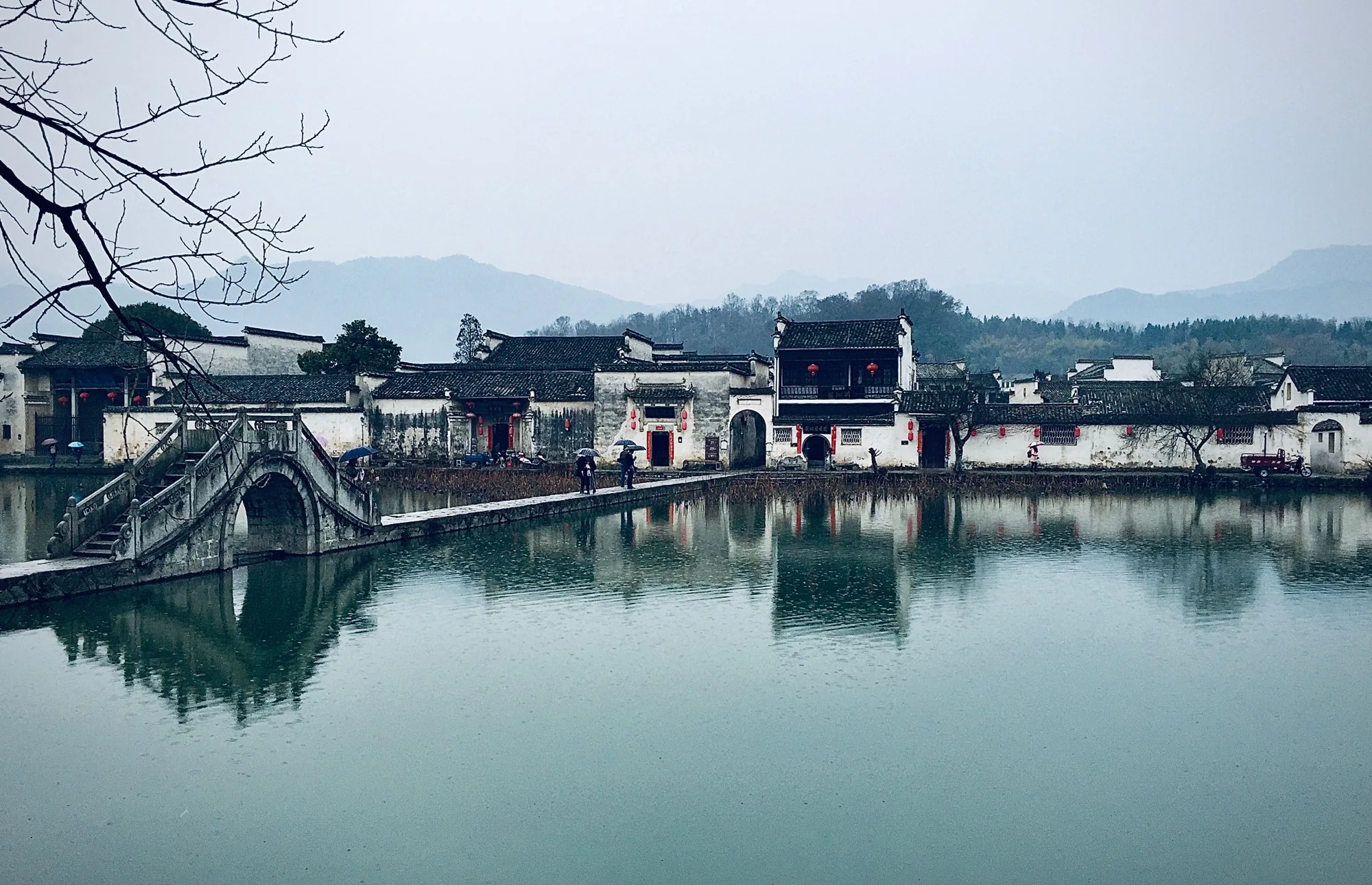
In Hongcun, a white wall can become the brightest surface in the view, balanced by the dark rhythm of tiled roofs. A reflection repeats the village with a slight uncertainty: a ripple loosens a straight line, a patch of light interrupts a roof. Walk along the water and the arrangement keeps changing.
Water also belongs to the village’s design. UNESCO highlights the relationship between houses, street plans and water systems. The Huangshan municipal introduction to Hongcun records surviving Ming- and Qing-era dwellings. These are useful starting points for looking beyond the lakeside image, towards how the settlement was organised and inhabited.
UNESCO also connects these villages to a prosperous trading economy and family and clan organisation. That social history gives the elegant façades another dimension: they belong to a settlement shaped by relationships, status and returning merchants, rather than a collection of buildings designed simply to be admired. Looking from the water into a lane starts to reveal the village behind the image.
Follow the relationship between lane and water; notice where a view opens or narrows. Respect the thresholds of homes and ask before photographing residents closely. The village rewards curiosity that leaves people space to continue their day.
Two places, two heritage stories
Mount Huangshan was inscribed on the World Heritage List in 1990. The separate property Ancient Villages in Southern Anhui – Xidi and Hongcun followed in 2000. Keeping those designations distinct makes the pairing more interesting.
On the mountain, the conversation turns towards natural form and the artistic imagination. In Hongcun, it moves towards the arrangement of a settlement and the culture expressed through its buildings. Together they suggest how landscape can be contemplated, interpreted and lived within.
Leave room for a second look
A thoughtful itinerary leaves time for mountain walking, a considered descent and an unhurried village visit. Discuss walking comfort, accommodation location and the onward journey before choosing the pace. An overnight stay on the mountain or closer to the villages changes the shape of the experience; neither can promise particular weather or an empty scene.
For a private journey, the most useful starting point is what you want time to notice. Tell us whether that means longer walks, painting and architecture, or fewer moves between places. Plan your journey with Off Path Now, with space for Huangshan and Hongcun to reveal their own details.
Sources and further reading
UNESCO World Heritage Centre — Mount Huangshan
UNESCO World Heritage Centre — Ancient Villages in Southern Anhui – Xidi and Hongcun
Huangshan municipal government — Hongcun Village
Huangshan municipal government — transport information
Photographs: Man Fong Wong, 坤林 刘, lei wang / Pexels. Pexels License