By Off Path Now · Updated
A harvest laid out in colour
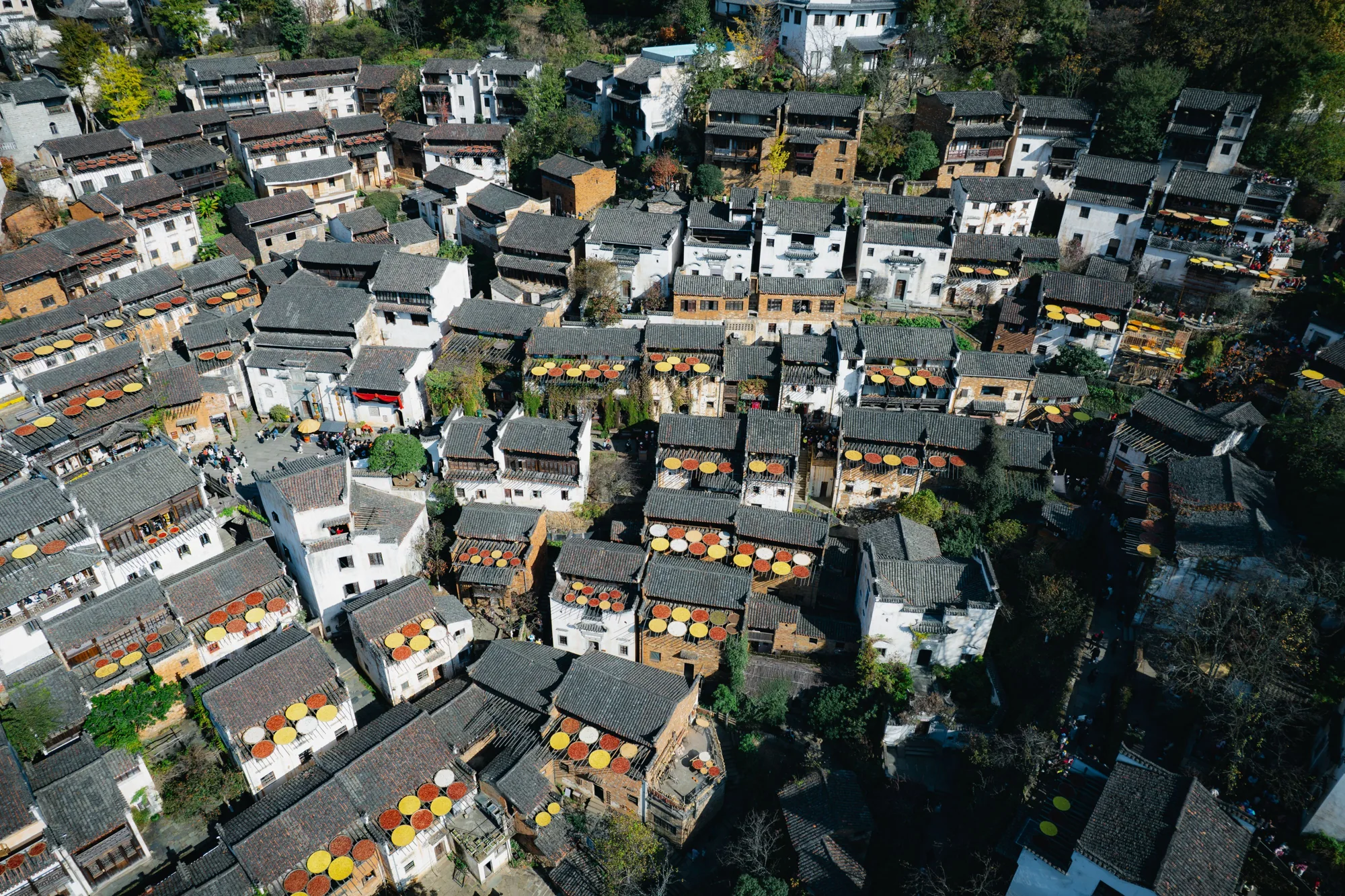
Look first at the circles. On the roofs in these photographs, round trays punctuate the dark tiles: a few bright accents, then whole bands of colour. White walls and narrow gaps between buildings give the arrangement a structure. It is an arresting image, but its subject is a practical act — laying out a harvest to dry.
Huangling, in Wuyuan County in Jiangxi province, is closely associated with this landscape. The name often attached to it is shaiqiu, usually translated as ‘autumn drying’. Before it becomes a photograph, the phrase describes a relationship between food, weather and the space available around a home.
What the word holds
In its reporting from Huangling, Xinhua describes crops being dried for winter storage. Seen with that purpose in mind, a tray is more than a patch of red or yellow. It is a working surface: a way to spread a harvest rather than leave it in a heap. The colours that draw visitors’ attention begin with the material being handled.
The English phrase ‘autumn drying’ can make the practice sound like a single seasonal event. Treat it instead as the name of a tradition, not a promise that every visit will reproduce a particular image. What is laid out, and how it looks, can vary. A date in an itinerary cannot fix the weather or the contents of a basket.
Architecture that makes room for work
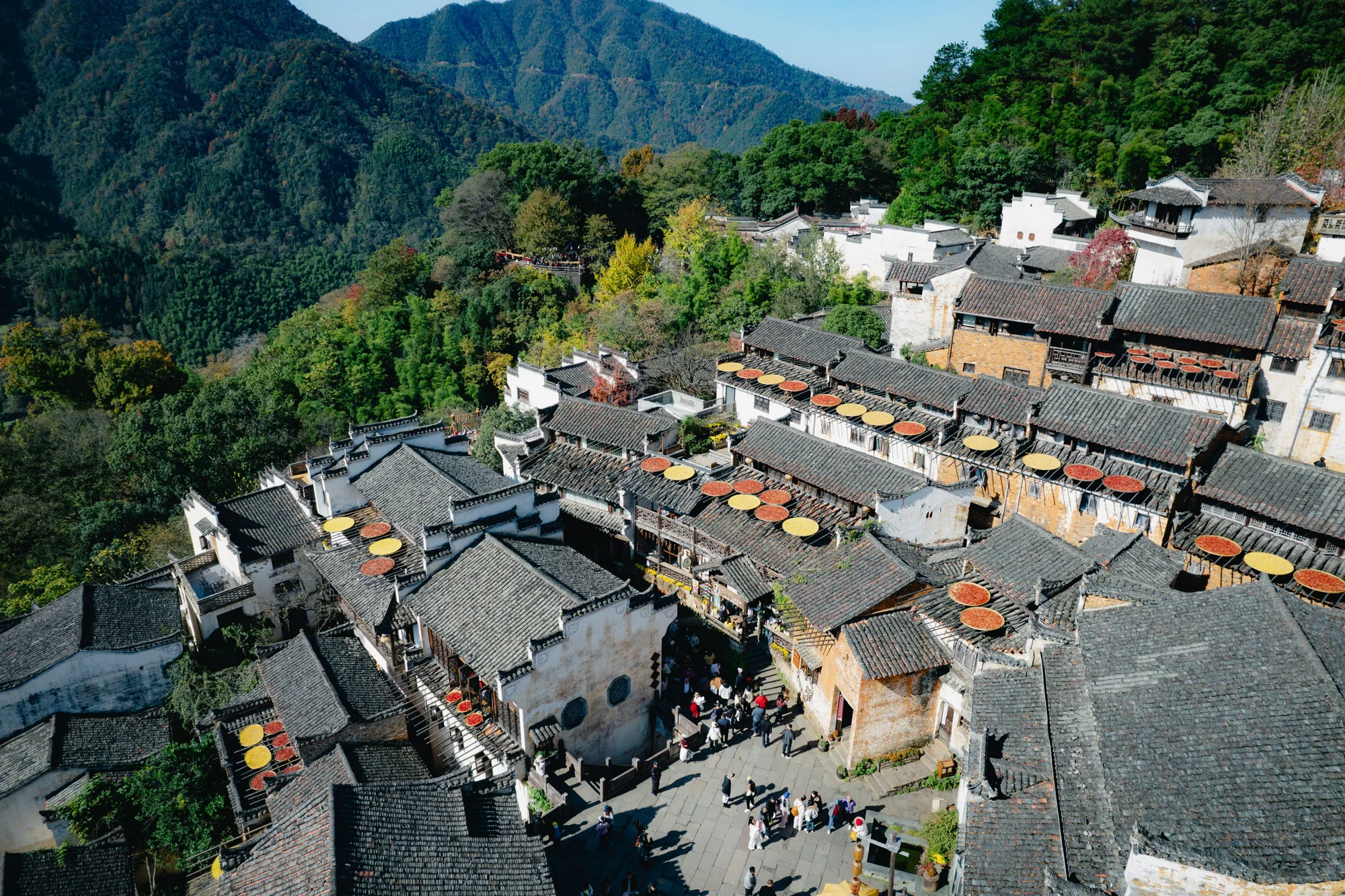
The scenic area’s own introduction describes Huangling’s hillside houses and wooden drying racks outside them. The slope matters. Rooflines rise in layers rather than meeting on one flat plane; platforms extend the useful area around a building. In the photographs, the racks read almost as another element of the architecture, between the enclosed room and the open air.
Follow the boundaries as well as the colour: the edge of a tiled roof, the white face of a wall, the repeated rim of a tray. The crop does not sit apart from the village. It gives familiar building materials another scale, small enough to read a basket against a whole roof. This is where the image becomes more interesting than an isolated close-up.
A tradition in the present tense
Huangling is also a tourism destination. A 2024 study in the Journal of Natural Resources examines how shaiqiu became central to the village’s tourism identity, with a company playing a significant part in that process. The scene therefore deserves to be read as both agricultural culture and a landscape presented to visitors.
That makes ‘untouched village’ an unhelpful description. It closes off the more revealing questions: how a useful practice becomes an emblem, how visitors encounter it, and what changes when everyday materials acquire a second life as a destination’s signature image. Recognising that contemporary layer does not diminish the beauty of the roofs. It gives the beauty a context.
An aerial photograph is a perspective
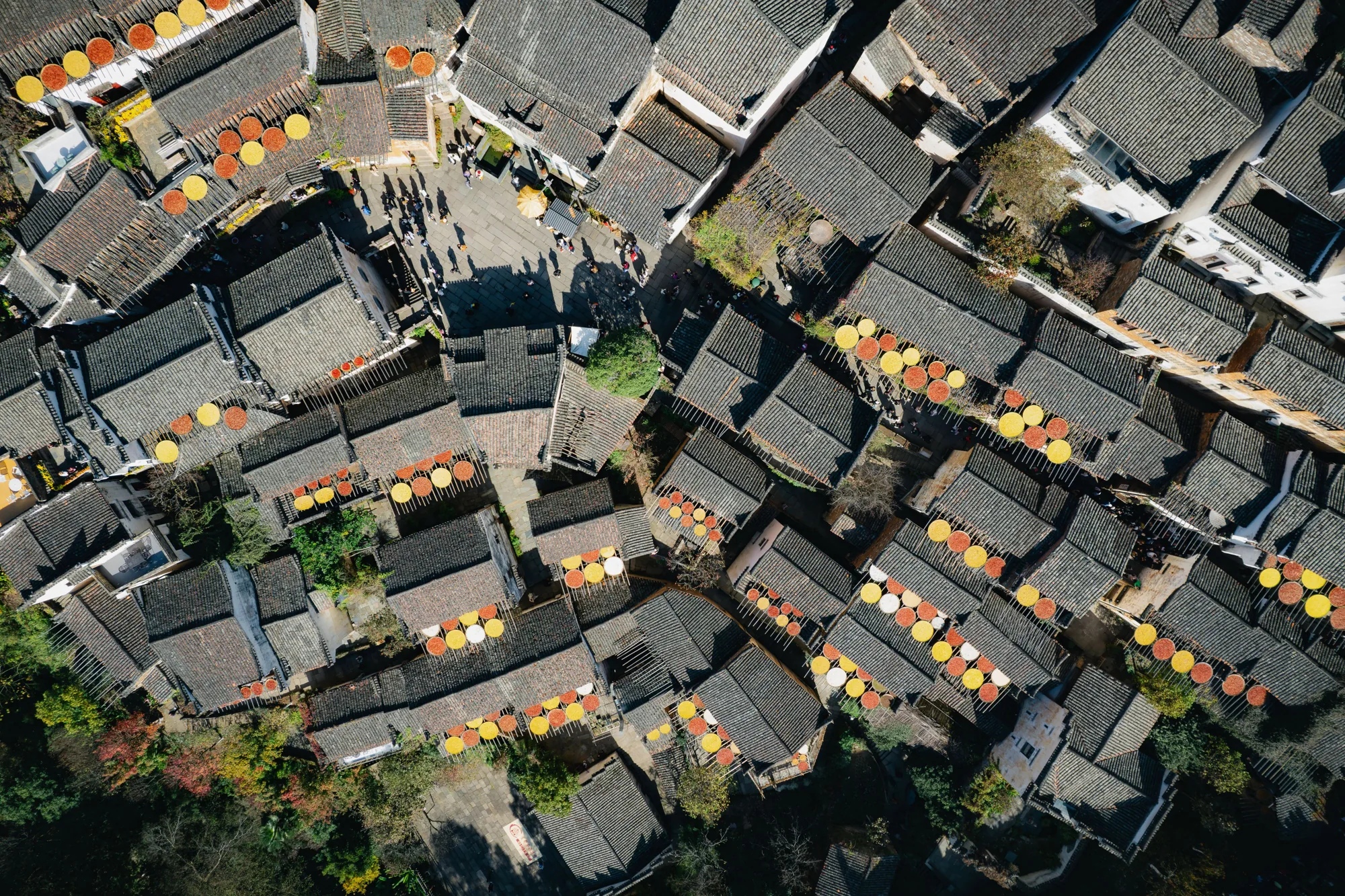
These three photographs are aerial views. Their neat geometry is not a promise of the view from a public walking route, or permission to fly a drone. From above, racks align and paths compress into narrow lines. At ground level, a visit has a different scale: the route through the buildings, the changes in level and the people sharing the space.
Let the pictures introduce the place without asking the day to imitate them. If a particular view is important, establish where it can actually be seen and whether access is available before building a visit around it. Walking requirements and weather also belong in that conversation. A carefully chosen stop works better than an expectation borrowed wholesale from an aerial frame.
Give Wuyuan a place in the journey
Wuyuan is the county; Huangling is one specific destination within it. Keeping that distinction clear helps a China itinerary move beyond a loose label on a map. Decide whether this part of the journey is about rural architecture, harvest culture or time outside major cities, then allow for the transfers and walking involved.
If the roofs and drying trays have caught your attention, tell us what interests you about Wuyuan. That is a useful starting point for discussing how it might fit your wider route. The most personal journeys begin with an interest worth staying with, rather than another famous image to collect.
Sources and further reading
Huangling scenic area — History and culture
Xinhua — Autumn drying in Huangling, 10 November 2018
Photographs: Jason Hu / Pexels. Pexels License