By Off Path Now · Updated
Start with the edge of the roof
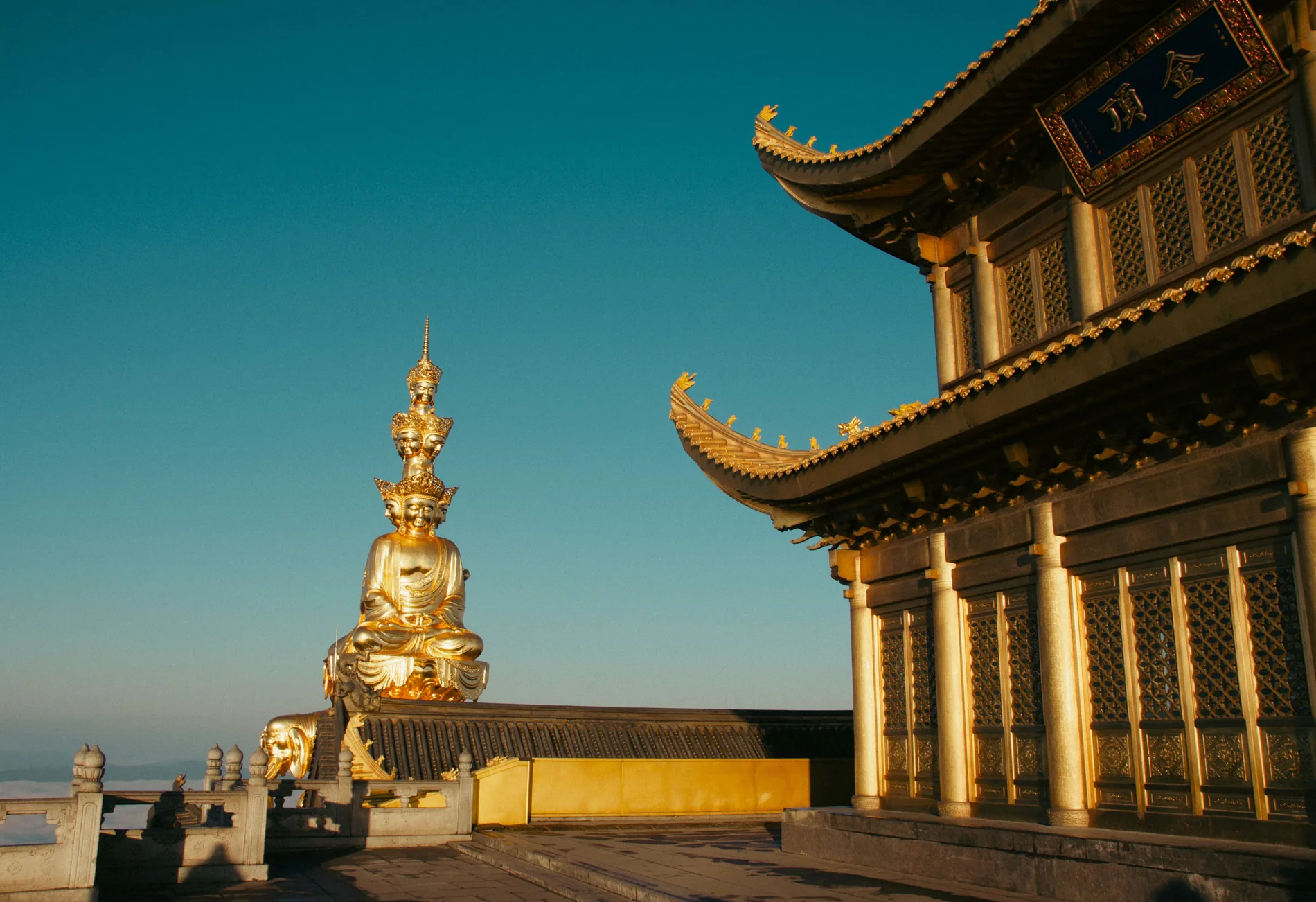
In the cover photograph, the roof of a temple cuts across the upper right of the frame. Its lifted corners catch the light; the gilt figure behind it is smaller in the picture, though far larger than anything at street level. The distance between the two is part of the image. It lets the eye move from a detail that could fit in the hand to a figure that belongs to a mountain skyline.
This is Jinding, the Golden Summit of Mount Emei in Sichuan. The statue represents Samantabhadra, known in Chinese as Puxian, a bodhisattva associated with the mountain. Huazang Temple also stands in the summit area. It is easy to treat these as a single sight: a famous photograph, one point on a map. The relation between them is more interesting. The roof directs the eye sideways while the figure draws it upward. The summit has a composition before it has a view.
The landscape moves through the frame
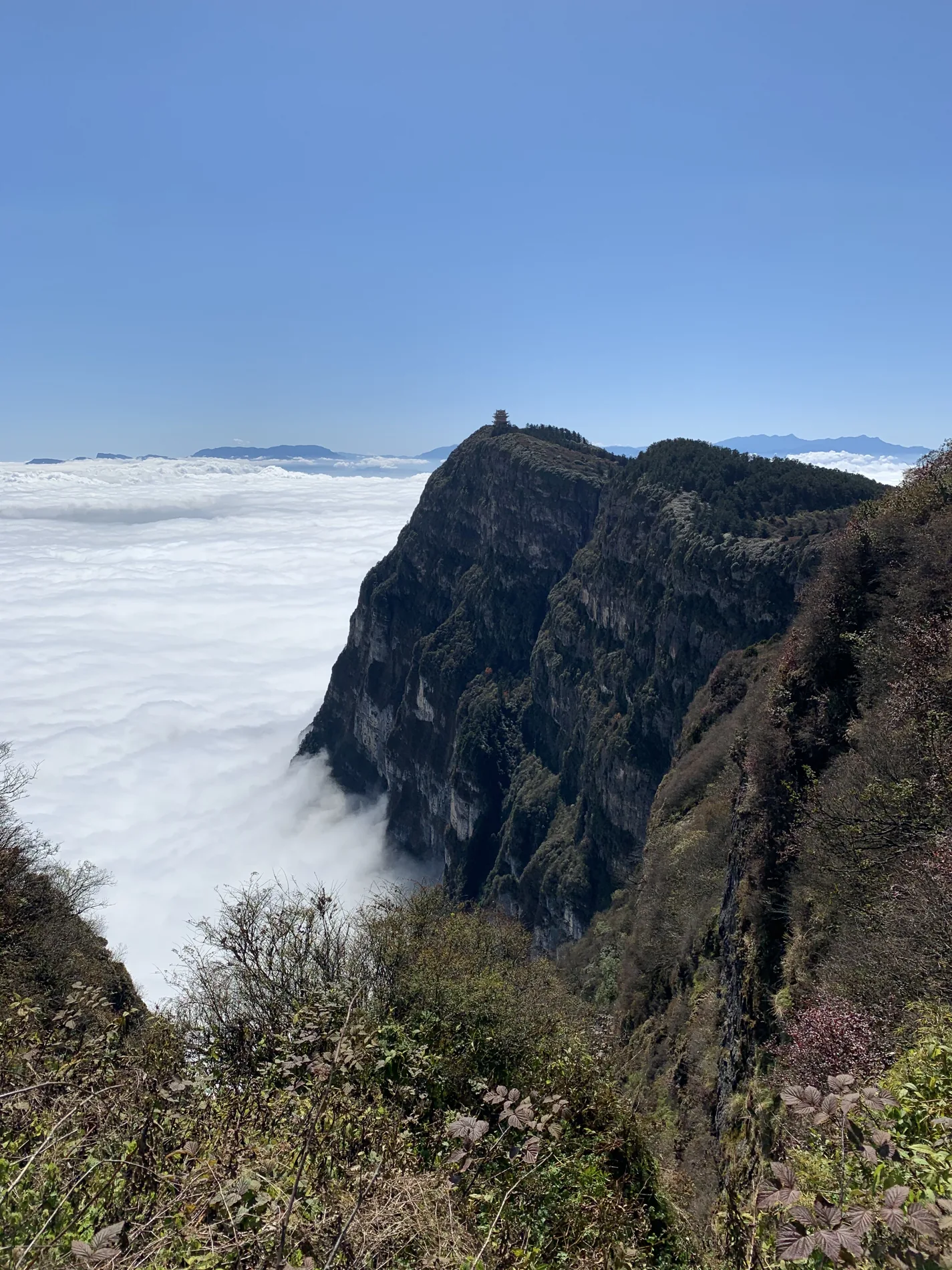
In a second photograph, almost everything that reads as architecture has fallen away. There is a slope in the foreground, a rock face, and a sheet of cloud that conceals what lies below. The land does not stop at the edge of that white field. What changes is the amount the eye can connect: a ridge with the next ridge, a building with the ground that holds it.
UNESCO recognises Mount Emei together with the Leshan Giant Buddha as a World Heritage property for cultural and natural values. Its account describes vegetation that ranges from subtropical to subalpine forest. That range matters to the experience of the mountain: the scale of a wooded path and the scale of an open summit are very different. A clear view from above can place them in the same landscape. It cannot tell you what it feels like to spend time at either level.
A second encounter with Puxian
Below the summit, Wannian Temple offers a second way to look at the same figure. UNESCO identifies its bronze Puxian as a tenth-century work. The comparison is between two settings as much as two objects: the brilliant summit figure belongs to an open platform and a long approach; the bronze belongs to an interior and the smaller distances of a temple visit.
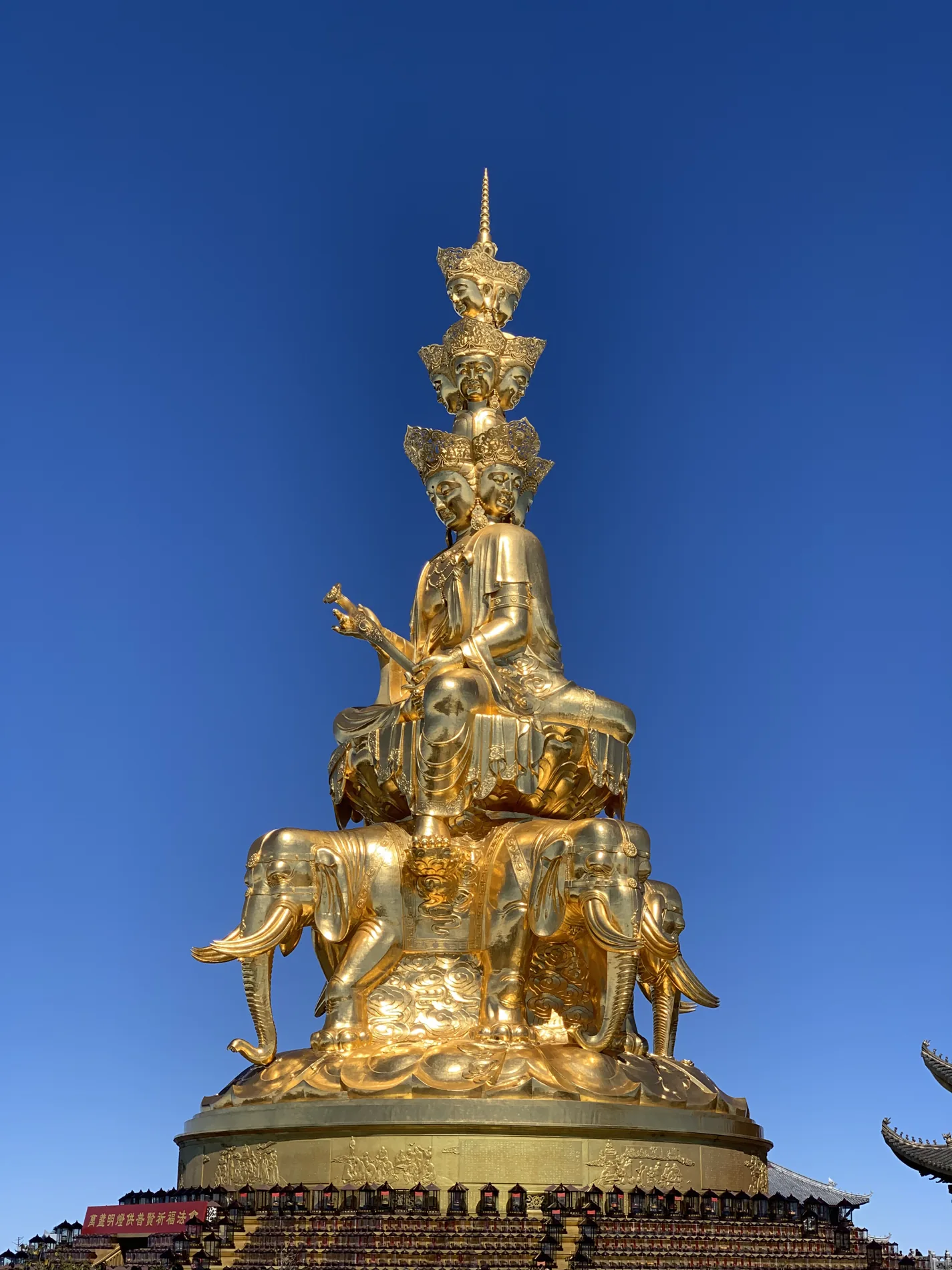
There is no need to identify every detail of the iconography to make that comparison. Consider where a visitor first sees the figure and what stands between that first view and a closer look. In the summit portrait, the upward stack of faces and the elephants beneath the figure set the rhythm. At Wannian, the space around the bronze gives the encounter a different measure. Check that the relevant hall is open before making the work the reason for the visit.
Make time for a lower chapter
Qingyin Pavilion is another useful point of comparison. UNESCO describes it as a garden temple complex, one of the places where architecture on Emei makes use of the hillside rather than levelling it into a neutral setting. Here the question is less about what stands highest than about how paths and structures lead attention through the landscape.
Allow enough time for one part of the lower mountain to become the visit in its own right. It might be a closer look at Wannian’s bronze if access allows, or a walk in the wooded setting around Qingyin at a pace that suits the group. A temple is a religious place as well as a building to read. When a threshold is restricted, or a sign asks visitors to put cameras away, the visit can continue from where you are permitted to stand.
Leave the sky to itself
A summit image can be the reason to choose Mount Emei without becoming the test of the day. In May 2026 the scenic area announced construction at Leidongping and upgrades to the Golden Summit cableway, with controls on access to the upper area during the works. Use the scenic area’s latest notices to check your dates, tickets and transport; a photograph is no evidence of current visibility or operating conditions.
Leave enough time to change the order if the upper mountain is difficult to reach. The lower visit is a strong alternative because it keeps the same subject in view: how a Buddhist mountain has been shaped by the placement of buildings and figures, and how those things change as you approach them. The gold is worth seeing. It becomes more legible when you have something to compare it with.
Sources and further reading
UNESCO World Heritage Centre — Mount Emei and the Leshan Giant Buddha
Mount Emei Scenic Area — Heritage landscape plan (PDF)
Leshan Municipal Government — Upper Mount Emei access notice, 22 May 2026
Leshan Municipal Government — Project update, 22 September 2026
Cover photograph: Jan Dvorak / Pexels. Other images: Off Path Now image collection. The photographs show different moments on the mountain.