By Off Path Now · Updated
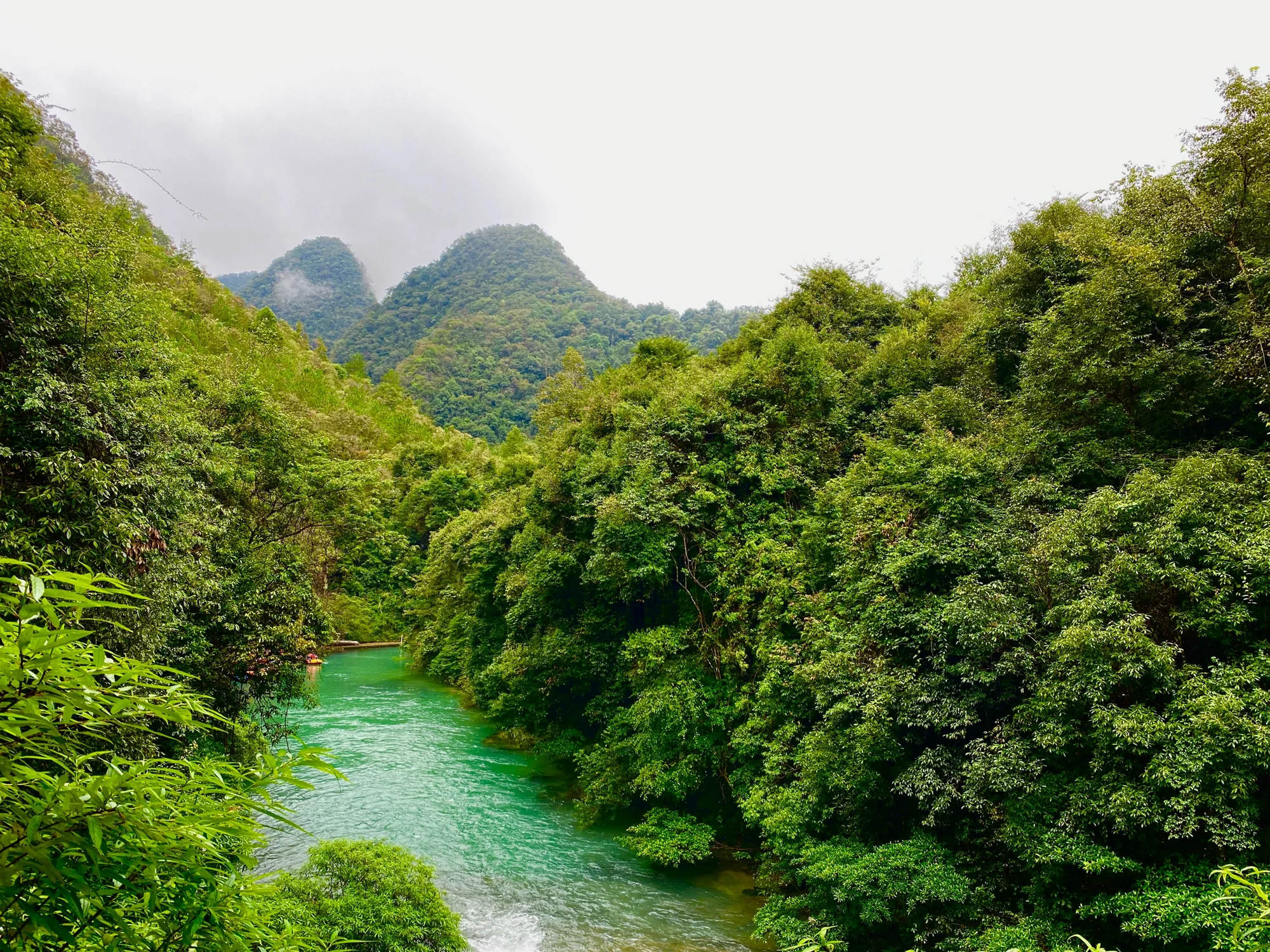
The edge between green and green
A forest meeting a stretch of water offers the eye an unusually gentle puzzle. Where does the bank end, and its reflection begin? The familiar image of Libo is built around this closeness: wooded hills, open water, a pale interruption of rock. For a journey through southern Guizhou, it suggests a welcome change of attention, from covering distance to looking carefully.
Start with the edges. Follow the line where branches lean towards the water, then notice how a stretch of exposed bank changes the composition. A broad landscape becomes easier to understand through these small relationships. There is pleasure in letting a view remain a view for a while, before reaching for its name.
Water makes the landscape
Karst is a landscape shaped by the dissolution of soluble rock. Water gradually enlarges cracks, helping create underground drainage as well as forms visible at the surface. The US Geological Survey’s explanation offers a useful starting point: what happens below ground belongs to the same story as what we see above it.
In Libo, cone and tower karst, sinking streams and caves give that story a particular geography. Rock is more than a backdrop to the water. Looking from a hillside to a channel, imagine the longer relationship between them. A walk need not become a geology lesson; one good question about how the landscape formed can deepen the whole day.
A heritage name with boundaries
Libo was part of the South China Karst World Heritage inscription in 2007. The serial property, made up of separate protected areas, was extended in 2014. UNESCO’s Libo component has defined boundaries; the heritage designation does not cover every view associated with the county.
Xiaoqikong and Daqikong are visitor areas within the wider Zhangjiang scenic destination. These names help organise a visit, while the UNESCO designation describes a protected landscape. Keeping the distinction in mind makes room for both: the enjoyment of an accessible walk and an interest in the wider natural system beyond the path.
Let the forest come into focus
At Maolan, elsewhere in Libo, the protected karst forest gives another perspective on the region. The Guizhou forestry research station studies a mixed forest of evergreen and deciduous broadleaved trees there. It is a useful reminder that the green cover has its own structure and complexity.
Bring that attention to any permitted woodland walk. Look at the spaces between trunks, the different outlines of leaves, the meeting of vegetation and exposed stone. A distant hillside reads as one continuous surface; close to the path, it resolves into separate forms. Take time for this smaller scale, without needing a rare sighting to give the walk a purpose.
Paths beside the water
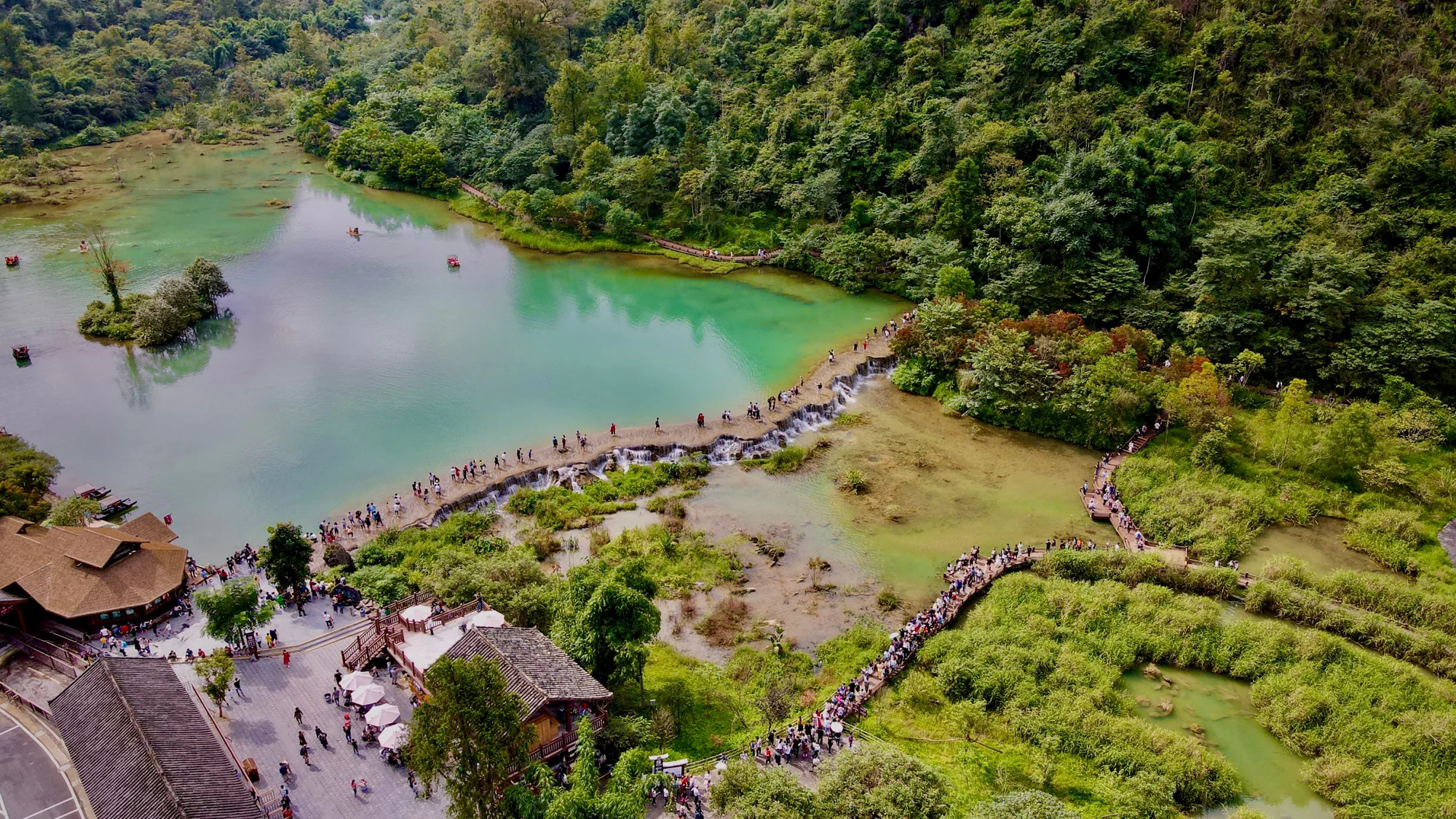
The provincial introduction to Zhangjiang describes Xiaoqikong and Daqikong through their waterfalls, streams, lakes, forests and caves. That combination invites two kinds of looking: outward towards the larger setting, then down towards the changing surface beside your feet. The interest lies in the movement between those scales.
Choose a manageable stretch of the currently open route and leave room to stop. A private guide can help connect what is visible to the wider landscape and adjust the day to your walking pace. Transport arrangements can make the day easier, but the most valuable part may be the interval when there is nothing to do except look.
Give the place some room
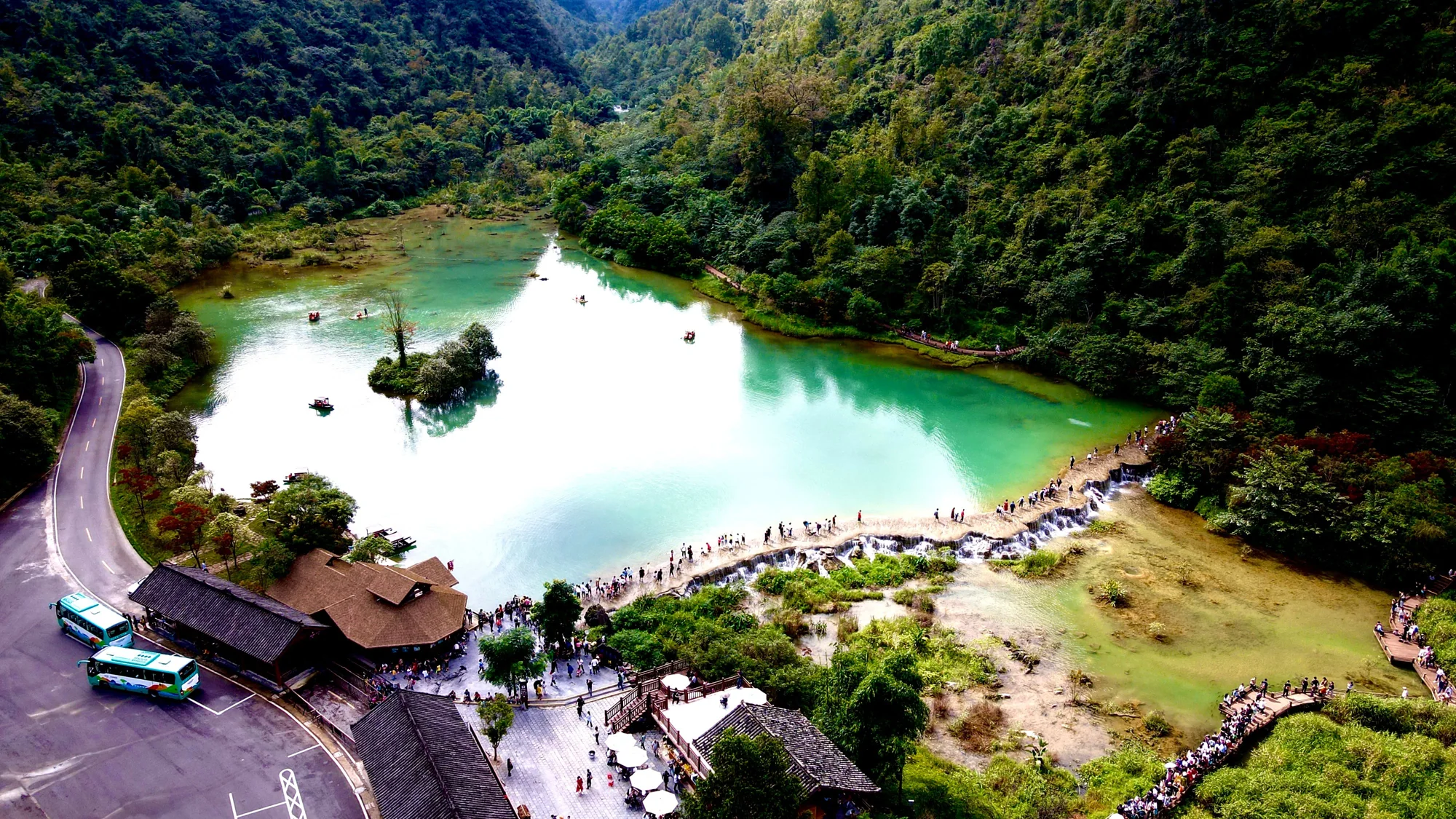
A photograph holds one instant. Let the day you visit have its own light, weather and water conditions. Avoid making a particular shade of blue or a photograph’s waterfall flow the measure of a successful visit. Plan with flexibility, and confirm current access and local arrangements before travelling.
Use designated routes, leave plants and stones where they belong, and take everything you bring away again. Keeping the water and forest healthy is part of enjoying them. There is no need to leave a path to make the encounter personal: returning attention to an ordinary bend in the bank can be enough.
A quieter chapter in Guizhou
Libo deserves space within a Guizhou journey: time to arrive without immediately beginning another transfer, and time for a landscape to become more than its best-known image. Balance walks with pauses and let the route reflect what interests you, whether that is geology, photography or simply a day spent among trees and water.
Our six-day Guizhou itinerary is a starting point for considering that balance. To shape the pace, walking and wider route around you, tell us about the journey you have in mind.
Sources and further reading
US Geological Survey — Ground Water and Surface Water: A Single Resource, Karst Terrain
UNESCO World Heritage Centre — South China Karst
UNESCO World Heritage Committee — Decision 31 COM 8B.11
UNESCO World Heritage Committee — Decision 38 COM 8B.9
Guizhou provincial English portal — Libo Zhangjiang Scenic Spot
Guizhou Academy of Forestry — Libo Karst Forest Ecosystem Research Station
Photographs: Collins Zhao / Pexels. Pexels License