By Off Path Now · Updated
Begin at the water’s edge
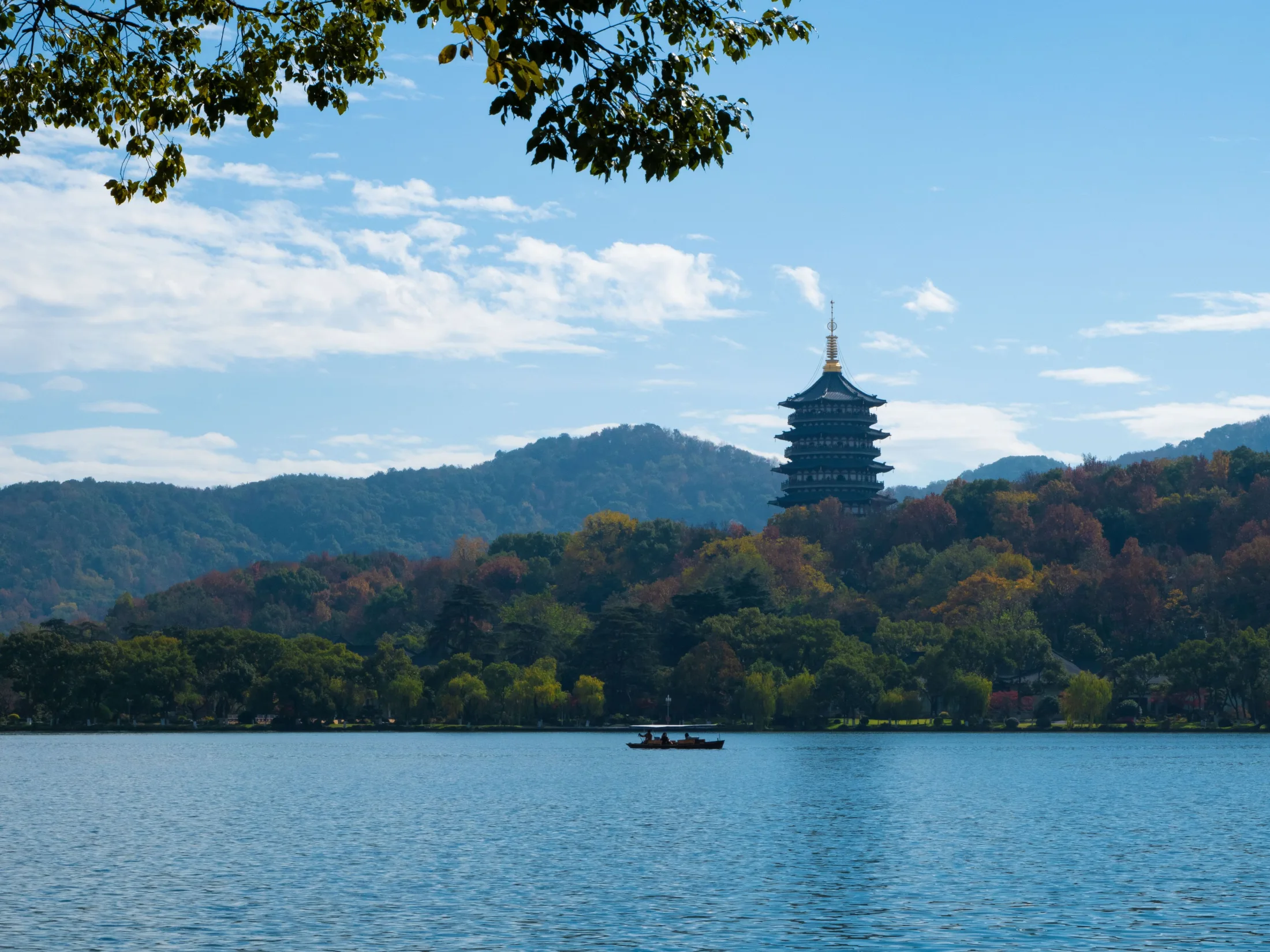
A wooden boat occupies the edge of the photograph. Its dark roof and patterned windows sit against a wide blue sky; small ripples break the reflection below. Across the water, the city is a low line. There is plenty to look at, but the boat leaves most of the frame to the lake. It is a useful first lesson in how to spend time in Hangzhou: leave something unfilled.
West Lake, or Xihu (西湖), lies beside the city of Hangzhou in Zhejiang province, eastern China. The water and the tea-growing hills nearby offer a different scale of attention from Shanghai’s riverfront buildings. A stay here can centre on a section of shoreline, a walk and a conversation over tea, with enough time between them for the place to become more than a photograph.
A landscape made by people
The lake’s apparently effortless scenery has a long history of human intervention. UNESCO recognises the West Lake Cultural Landscape of Hangzhou for the relationship between its water, surrounding hills and designed views. Causeways, islands and buildings are part of that composition. Looking at the lake as a cultural landscape changes the question from ‘What is natural here?’ to ‘How have people learned to live with this view?’
One answer leads to Su Shi (苏轼), the Song-dynasty poet and official also known as Su Dongpo. During his administration in Hangzhou, dredged material from the lake was used to build the Su Causeway, or Sudi (苏堤). Hangzhou’s official account connects that work with the lake’s restoration. The line across the water carries the memory of practical work as well as a famous literary name.
That connection matters more than collecting another poet’s statue. A causeway is a way through a view: it gives the water a near side and a far side, then changes both as you walk. The landscape can be read through ordinary decisions about where to stop, which direction to face, and whether to keep moving when a view has become interesting.
Choose a stretch, then stay
For a first visit, choose one lakeside stretch or part of a causeway and let that be enough for the first part of the day. There is no need to turn the shore into a distance target. Pause where the water opens out; look back towards the city as well as towards the hills. The same lake can feel quite different from opposite sides of a path.
West Lake’s tradition of poetically named views gives this kind of attention a cultural context. Names associated with spring dawn or moonlight suggest particular ways of looking, rather than a promise that every effect is available on every visit. A cloudy afternoon is its own scene. So is a clear day with hard shadows and wind on the surface. Neither needs to imitate a promotional image.
A boat can change the angle again, but it need not become the centre of the programme. Choose a route and departure point that suit the rest of the day, after checking current services. Or stay ashore and watch the boats cross the frame. Sitting beside the water is a perfectly reasonable use of travelling time; the lake does not require a full circuit to be understood.
From open water to tea rows
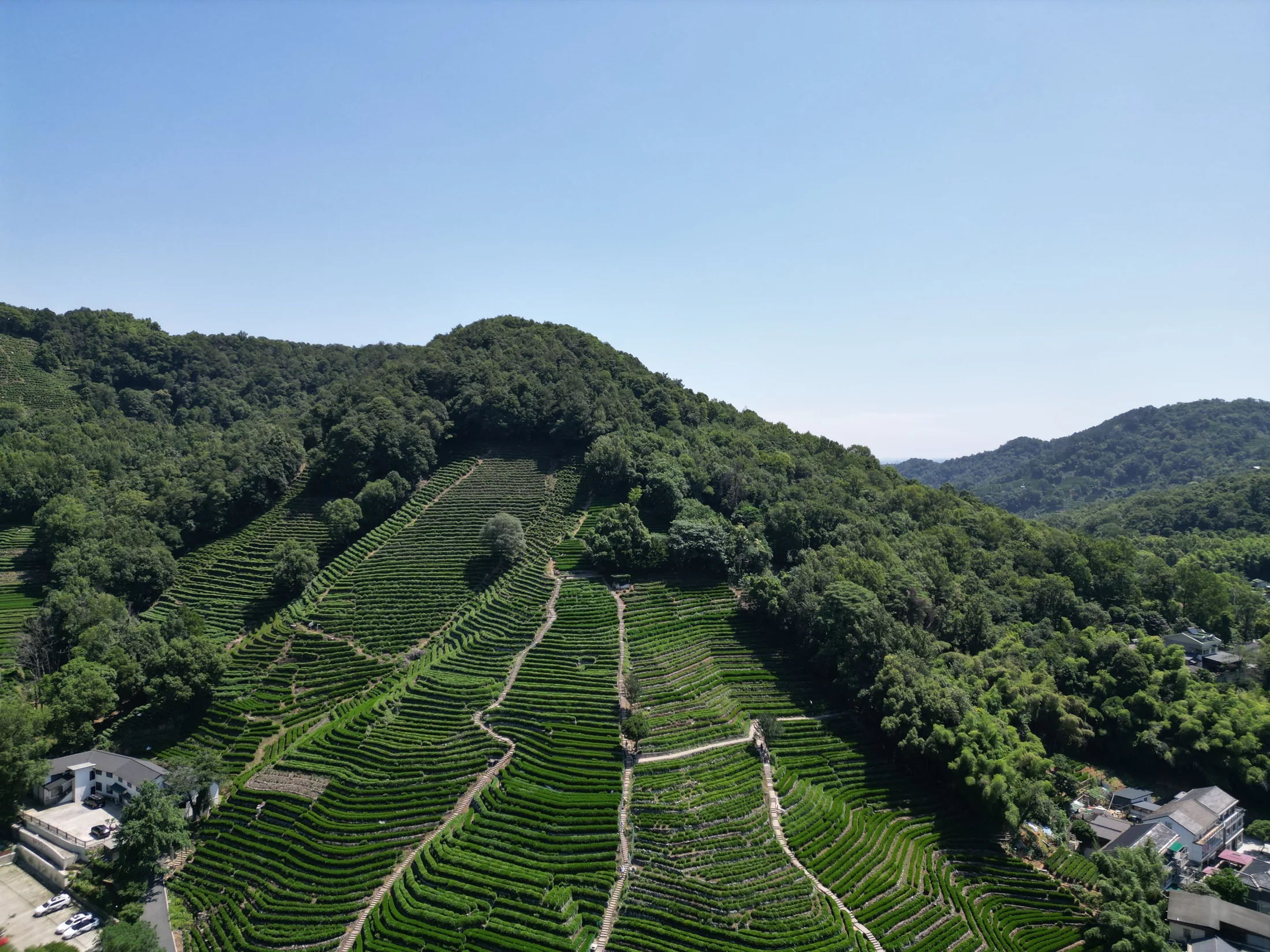
The move towards the tea hills brings a different visual rhythm. In Amber Peng’s photograph of Longjing tea plantations, curved rows run up a slope between wooded ridges. Narrow pale paths interrupt the green. The aerial view shows a working agricultural landscape. From a public path, the interest lies in how the cultivated ground meets the trees, buildings and contours around it.
Longjing (龙井), often translated as Dragon Well, is a green tea associated with Hangzhou. Longjing village and the surrounding tea country give that name a setting beyond the cup. For more context, the China National Tea Museum has Shuangfeng and Longjing branches, with exhibitions on tea history and tea-related objects. A museum visit and time in the growing landscape offer two complementary ways to explore the subject.
Over tea, useful questions can be simple: where were these leaves grown, when were they picked, and how were they processed? Let the answers guide the conversation rather than assuming every cup sold in Hangzhou has the same origin. Tea fields are agricultural land; remain on permitted paths and arrange any farm visit or tasting in advance. A photograph of green rows is not evidence that harvesting is taking place during your stay.
Let the lake have the last word
A thoughtful Hangzhou day needs room for the distance between the shore and the hills, for a meal, and for changes in weather. Combine a limited lakeside walk with one tea-related visit instead of filling every gap with another attraction. Check the chosen museum’s current opening arrangements and any boat service before setting out. The exact order should follow your interests and the day’s conditions, rather than a fixed list of essential stops.
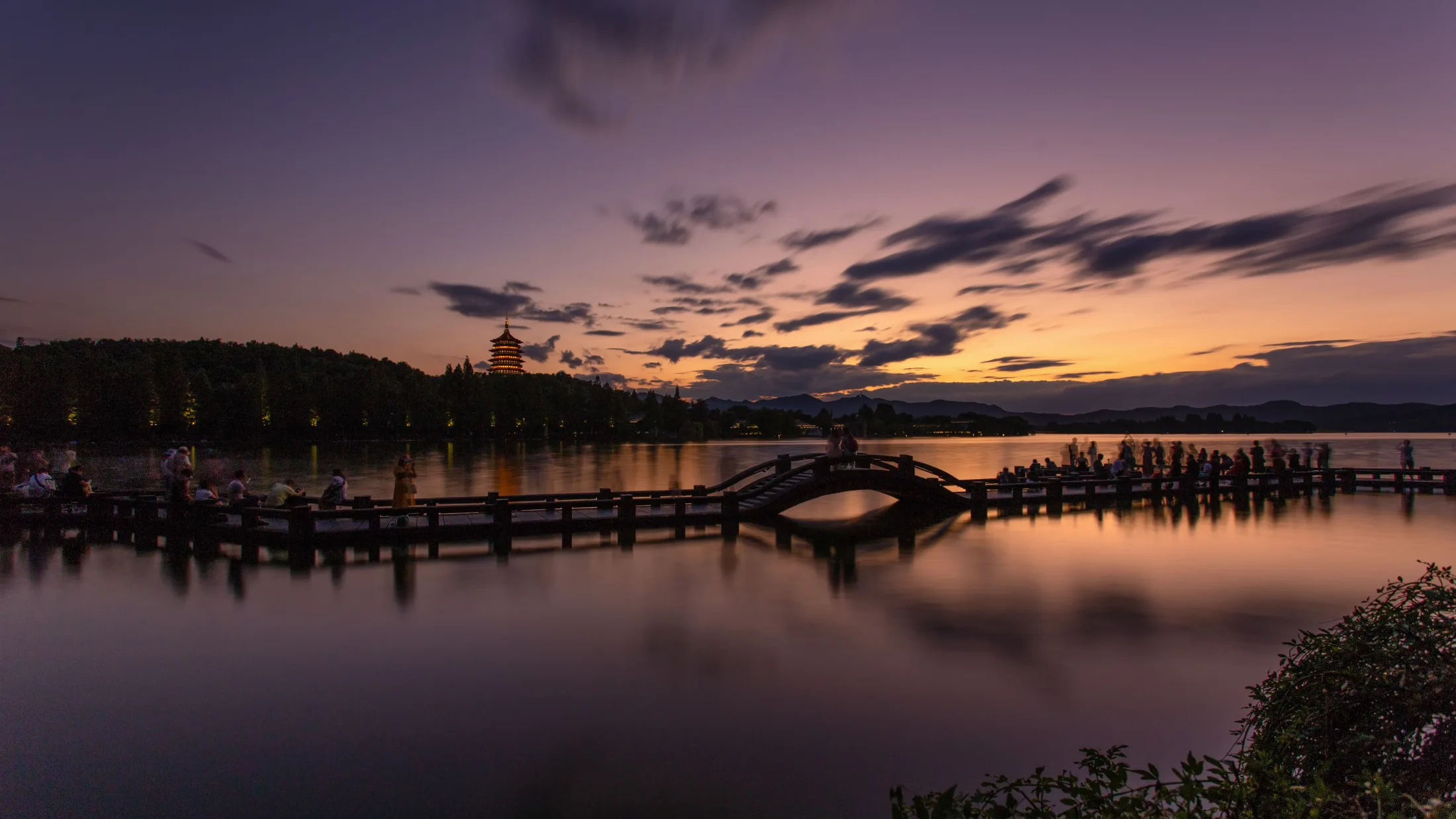
The evening photograph brings the eye back to the water. A low railing crosses the water; a dark ridge and a slender pagoda shape stand across the lake. Farther away, buildings catch the remaining light. The city has not disappeared, and the lake has not emptied of life. They share the view. For a China journey shaped around culture and daily life, Hangzhou offers time to notice that relationship, then return to it after the light has changed.
What makes Hangzhou’s West Lake a cultural landscape?
Its significance includes the relationship between water, hills and views shaped by causeways, islands, planting and buildings. UNESCO recognises this landscape as a World Heritage property.
How can I combine West Lake and Longjing tea culture?
Choose a manageable lakeside walk and one tea-related visit, allowing for travel between them. The China National Tea Museum’s Shuangfeng and Longjing branches provide context; confirm current visiting arrangements before going.
Suzhou: a garden in the frame · Plan your journey
Photographs illustrate separate views and do not document a single day or current conditions. Acres of Film, Amber Peng, CK Seng / Pexels.
Photography sources: Acres of Film · Amber Peng · CK Seng.