By Off Path Now · Updated
A view with somewhere to sit
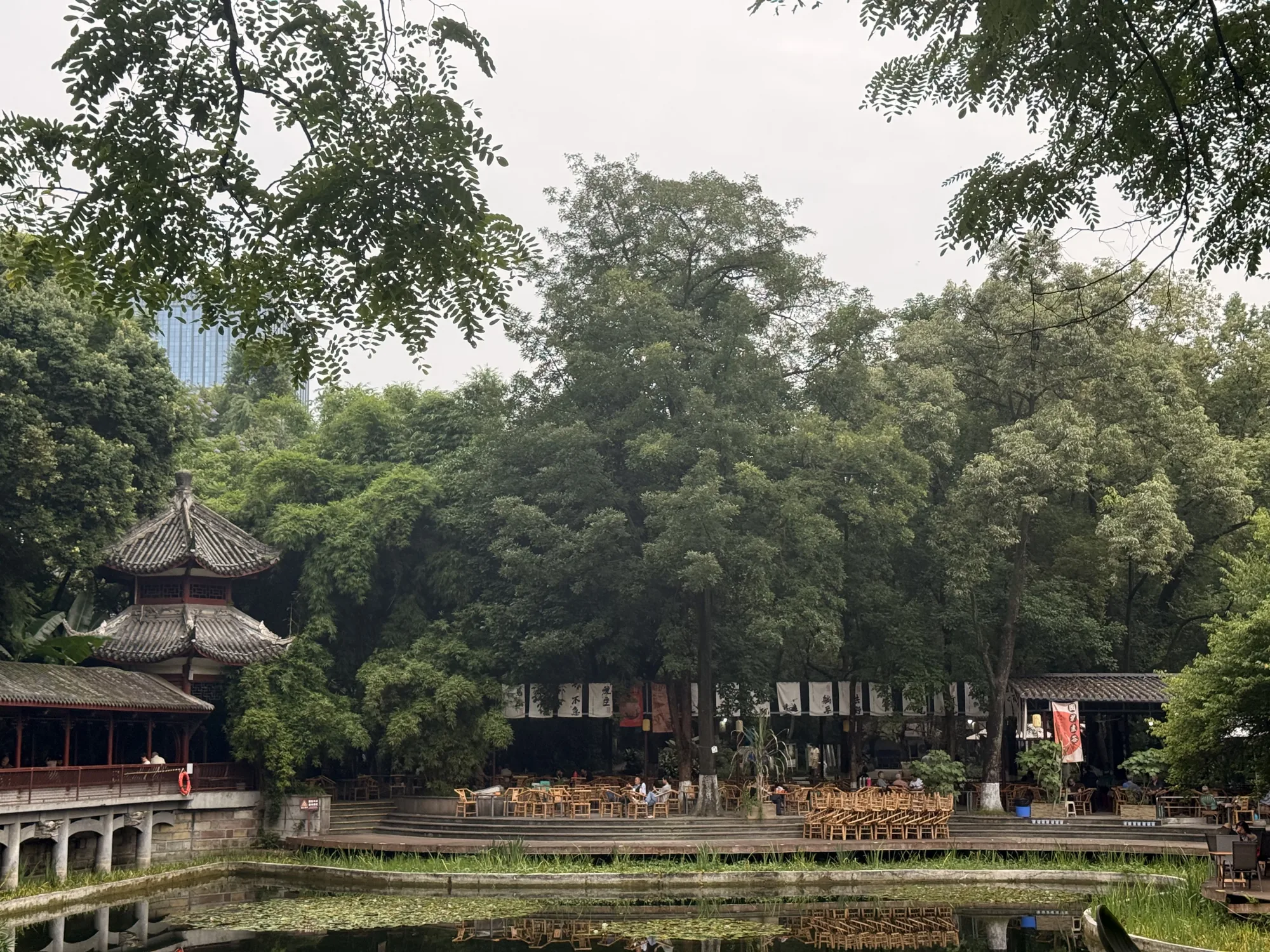
Across the water, a long line of bamboo chairs follows the edge of the garden. A pavilion rises to the left, while trees gather into a deep green backdrop. The composition has two kinds of structure: the tiled roofs that catch the eye, and the smaller arrangement of seats that invites it to linger. At Chengdu’s Culture Park, both deserve attention.
Culture Park — Wenhua Gongyuan, 文化公园 — is in Chengdu’s Qingyang district. For a traveller interested in the city’s daily life, the pond offers a useful starting point. Look at how buildings meet planting, where paths turn towards the water, and how places to pause are worked into the view. The garden becomes legible at the scale of a person sitting down.
Flowers with a social history
Chengdu Museum traces the Qingyang Flower Fair to the Tang and Song periods. Its account describes a later development into a spring gathering combining culture, commerce and entertainment, particularly in the late Qing and Republican periods. Flowers belonged to a wider occasion: coming out into the city, browsing, and sharing public space.
That history changes how a garden can be read. A flower display is something tended and arranged, but it also draws people together. The interest lies in the movement around it as much as in the plants themselves. Seen in this light, Culture Park carries a relationship between gardening and urban company, renewed through different uses of the same setting.
The doorway holds the next scene
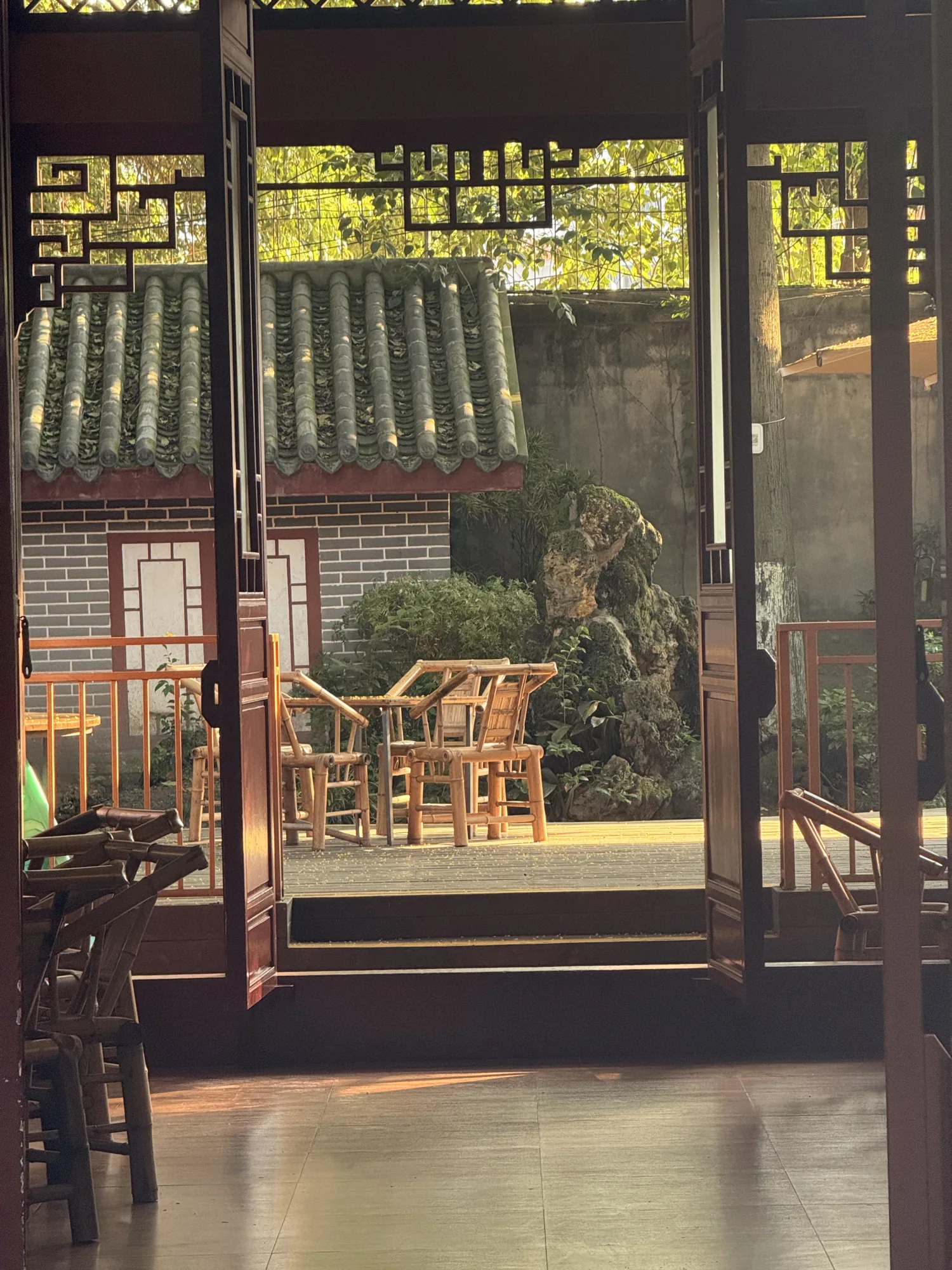
One of our photographs looks from a shaded interior through an open doorway. Beyond it are bamboo chairs, a tile-capped brick wall and a small piece of rockwork. Light travels across the floor, joining the room to the space outside. The frame gives an ordinary group of objects the attention usually reserved for a distant landmark.
A pause can begin with such a change in perspective. From one position the roof is the subject; from another, a chair back or the interval between posts takes its place. For a visitor carrying a camera, the rewarding question is where to stand and what to leave visible. Keep doorways clear and allow the people using the space their own uninterrupted afternoon.
A garden that keeps another calendar
The park’s seasonal life is documented beyond these photographs. Red Star News reported the opening of its spring flower market on 7 March 2026, with the programme running to the end of that month. A Chengdu Daily report on 5 June described a summer lotus display. These were separate occasions within the same year, with different plants and ways of gathering.
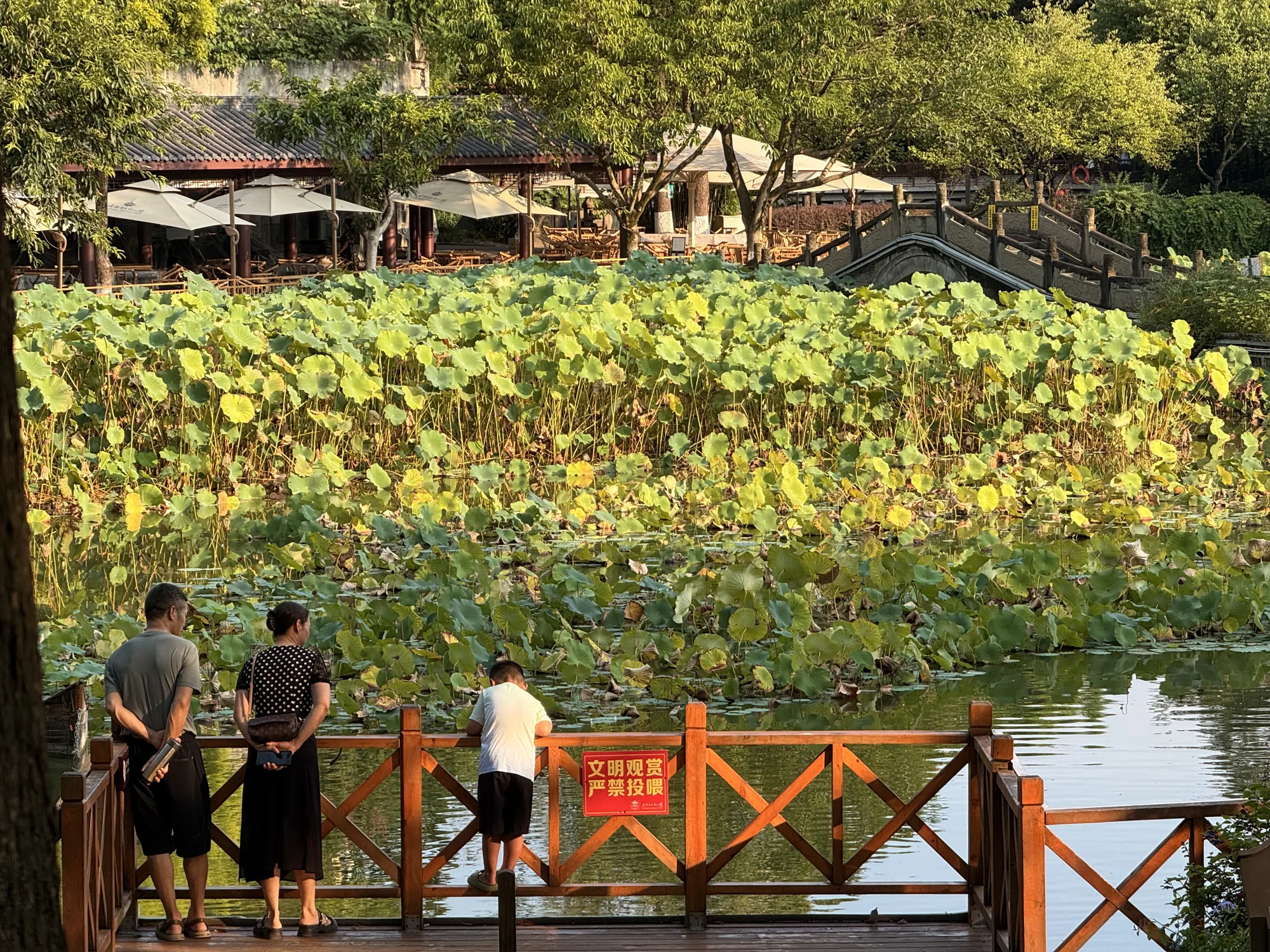
In our pond photograph, broad lotus leaves occupy much of the water while visitors pause beside the railing. It is a particular view from our collection, with no verified shooting date. The image suggests what patient looking can involve: leaves overlapping, a gap of open water, the changing balance between the opposite bank and the foreground. Your travel dates will give the garden another appearance.
From the garden to the stage
Culture Park also offers a connection to Sichuan’s performing arts. Shu Feng Ya Yun, at the park’s Qintai Road side, presents Sichuan opera skills such as face-changing — bian lian — alongside traditional variety arts. Its published introduction includes fire-breathing and hand-shadow performance. The programme gives a garden visit another focus: the movement of performers and the attention of an audience.
A walk and a performance can make complementary parts of a city day. Plan the show as a separate ticketed visit, confirming the actual entrance, programme, start time and seat category before booking. If a particular opera excerpt or a full production interests you, ask what is being staged; the name of the venue alone does not describe an evening’s entire programme.
Leave an interval in the city
In a private Chengdu itinerary, a park can provide a change of scale between larger visits. Give that interval its own purpose: a walk around the water, an interest in garden design, or time to sit together. Any tea order, seating arrangement or organised activity should follow the venue’s current terms. The appeal of the place does not depend on recreating every detail in a photograph.
Culture Park makes a good subject for a conversation about the kind of city experience you enjoy. Some travellers look closely at architecture; others prefer planting, photography or an unhurried afternoon. Tell us which details draw you to Chengdu, and we can discuss their place within your wider China journey. A garden allows the route to be shaped around attention, as well as distance.
Sources and further reading
Chengdu Museum — Qingyang Flower Fair (青羊花会)
Red Star News — Chengdu Culture Park spring flower market, 7 March 2026
Chengdu Daily / Red Star News — Lotus season at Culture Park, 5 June 2026
Shu Feng Ya Yun — company introduction and performance forms
Shu Feng Ya Yun — current official booking conditions (confirm programme and session)
Photographs: Off Path Now — Chengdu Culture Park. Images from our own collection; shooting dates unverified.