By Off Path Now · Updated
A monastery in the rock face
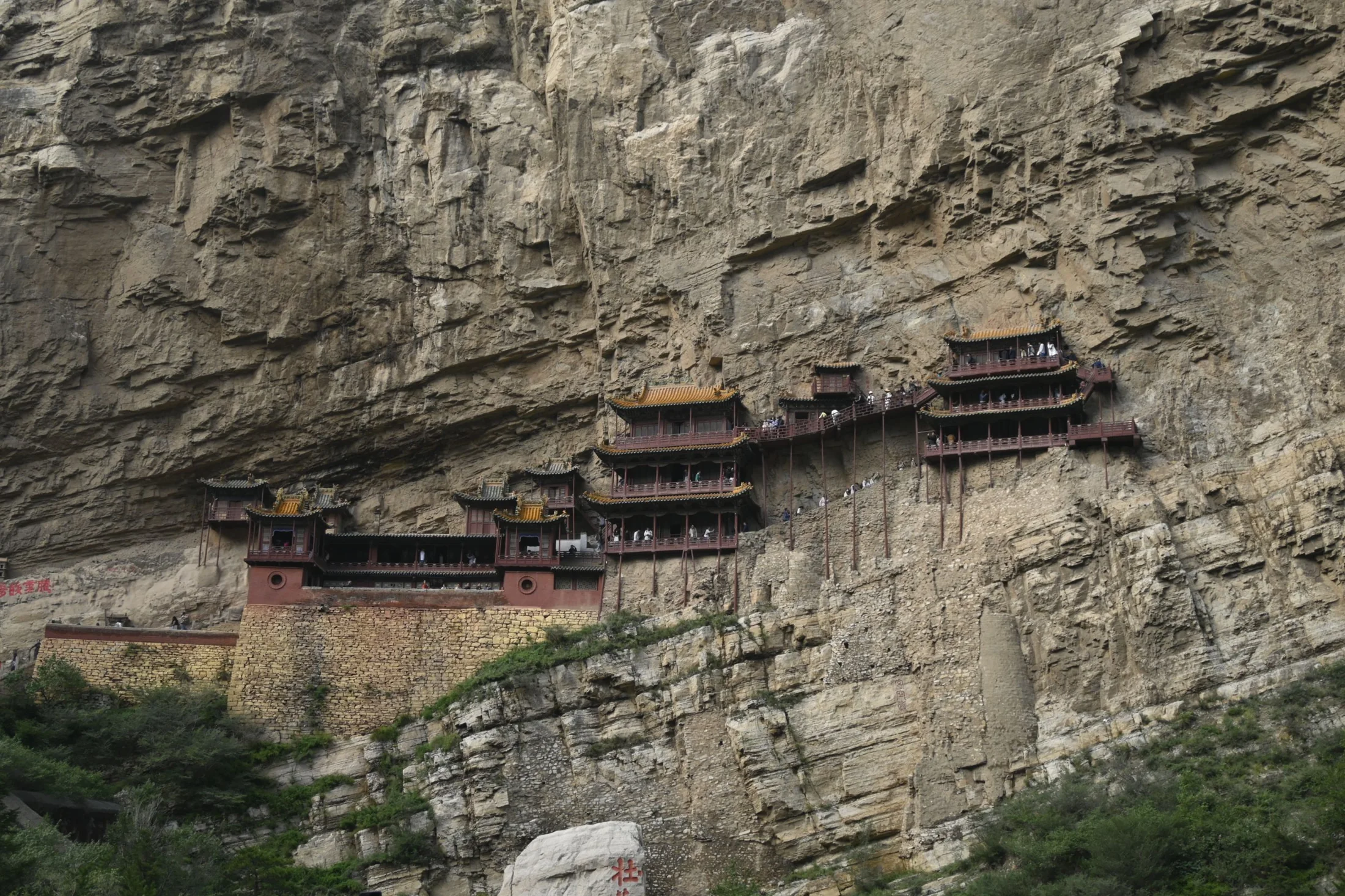
The cliff takes up almost the whole photograph. Across its grey face runs a slender line of red buildings, their tiled roofs tucked beneath an overhang. Walkways connect one small hall to another; the rock continues above and below. At first glance, the Hanging Temple looks like an imagined place. The tiny visitors on its galleries bring it firmly into the human world.
That moment of recognition is a compelling reason to travel to Shanxi (山西), in northern China. Black Myth: Wukong has introduced its temples and sculpture to a new audience, but the pleasure of visiting goes beyond identifying something familiar. A real building has a scale, a setting and a history that ask for more time than a passing image.
The real places behind Black Myth: Wukong
Released in 2024 and inspired by Journey to the West, Black Myth: Wukong draws on Chinese mythology and real architectural heritage. Datong’s culture and tourism bureau identifies both the Hanging Temple and Yungang Grottoes among the local places used for the game. This gives a journey around Datong a clear starting point, without requiring you to know the story or play the game. Source1 · Source2.
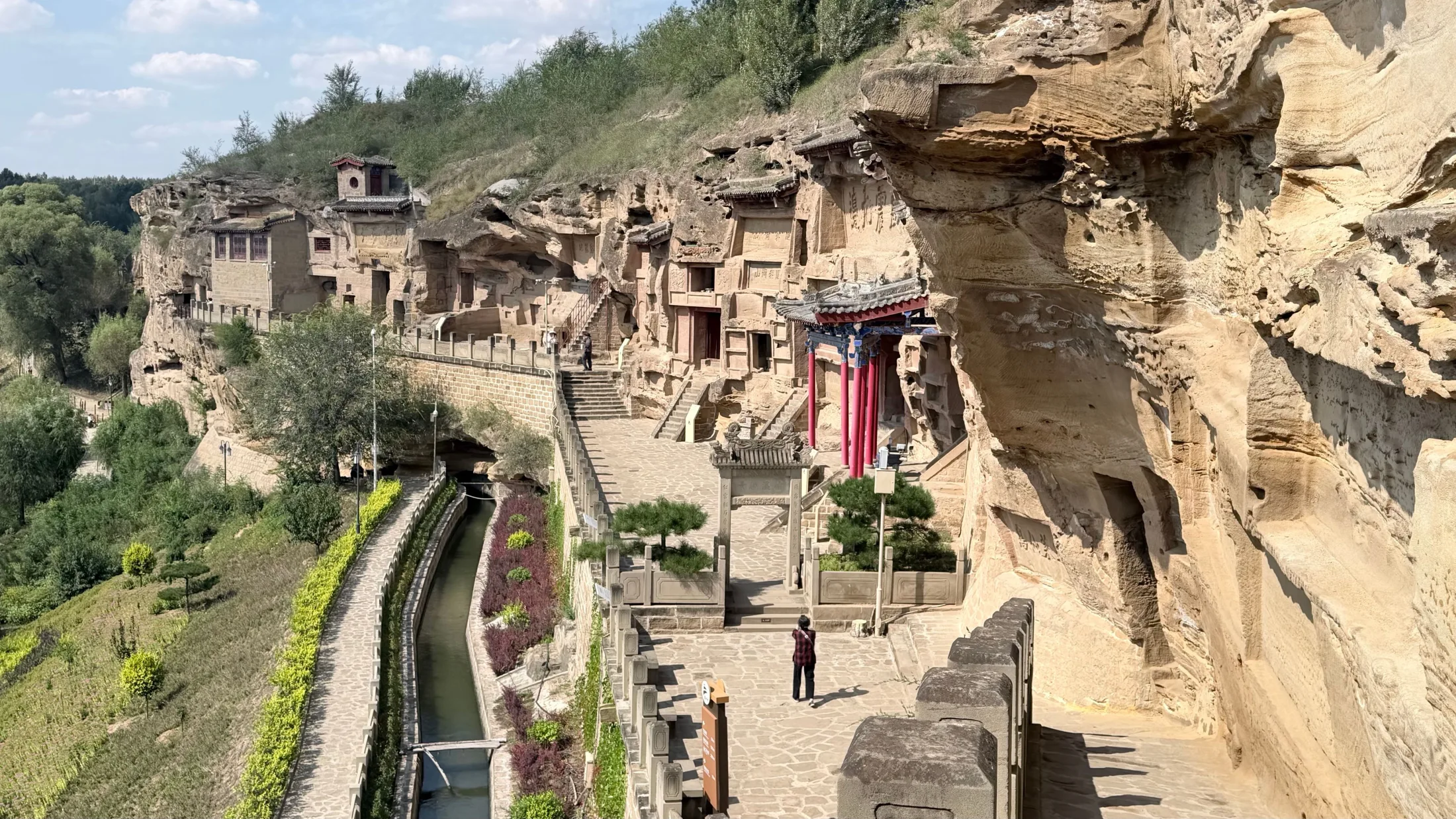
Keep one distinction in mind: an artwork can borrow a sculpture, a building or a visual detail and place it in an imagined setting. Visiting the source is an encounter with the place on its own terms. Look for the real material, the surrounding landscape and the work of its makers, rather than expecting a game level to become a literal walking map.
At the Hanging Temple, look at the join
The Hanging Temple, or Xuankong Si (悬空寺), lies in Hunyuan county in the Datong area. Its origins reach back to the late fifth century. The complex is also associated with Buddhism, Taoism and Confucianism, bringing several traditions into one place. The cliffside setting is the immediate attraction; the cultural history gives the visit another dimension. Source.
From a viewpoint below, follow the boundary between the built structure and the rock. Roof edges make a fine, regular line against a surface full of fractures and ledges. The photograph makes this relationship unusually clear: a long stretch of mountain, then the small decisions that allow people to occupy it. Questions about support, shelter and access become as interesting as the overall silhouette.
If heights or narrow passages are uncomfortable, the exterior view can be a worthwhile focus in its own right. Check the current arrangements before deciding how to visit. A satisfying encounter with the temple need not depend on recreating somebody else’s camera angle.
Yungang: a world inside the stone
At Yungang Grottoes (云冈石窟), the relationship between building and mountain changes. Much of the art takes shape within the rock itself. This UNESCO World Heritage site near Datong preserves Buddhist cave art from the fifth and sixth centuries. Its sculptures bring together influences from South and Central Asia and Chinese artistic traditions. Source.

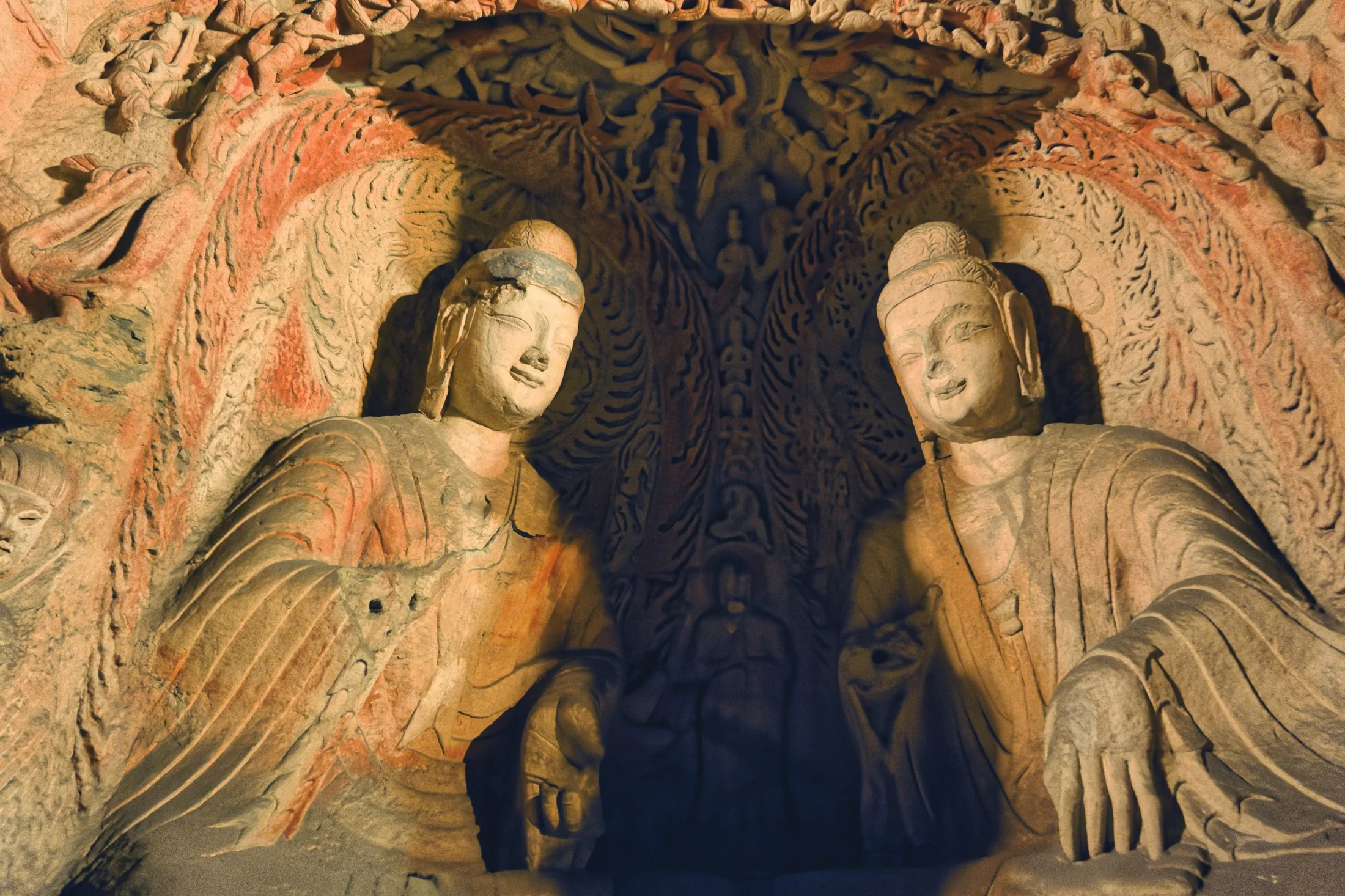
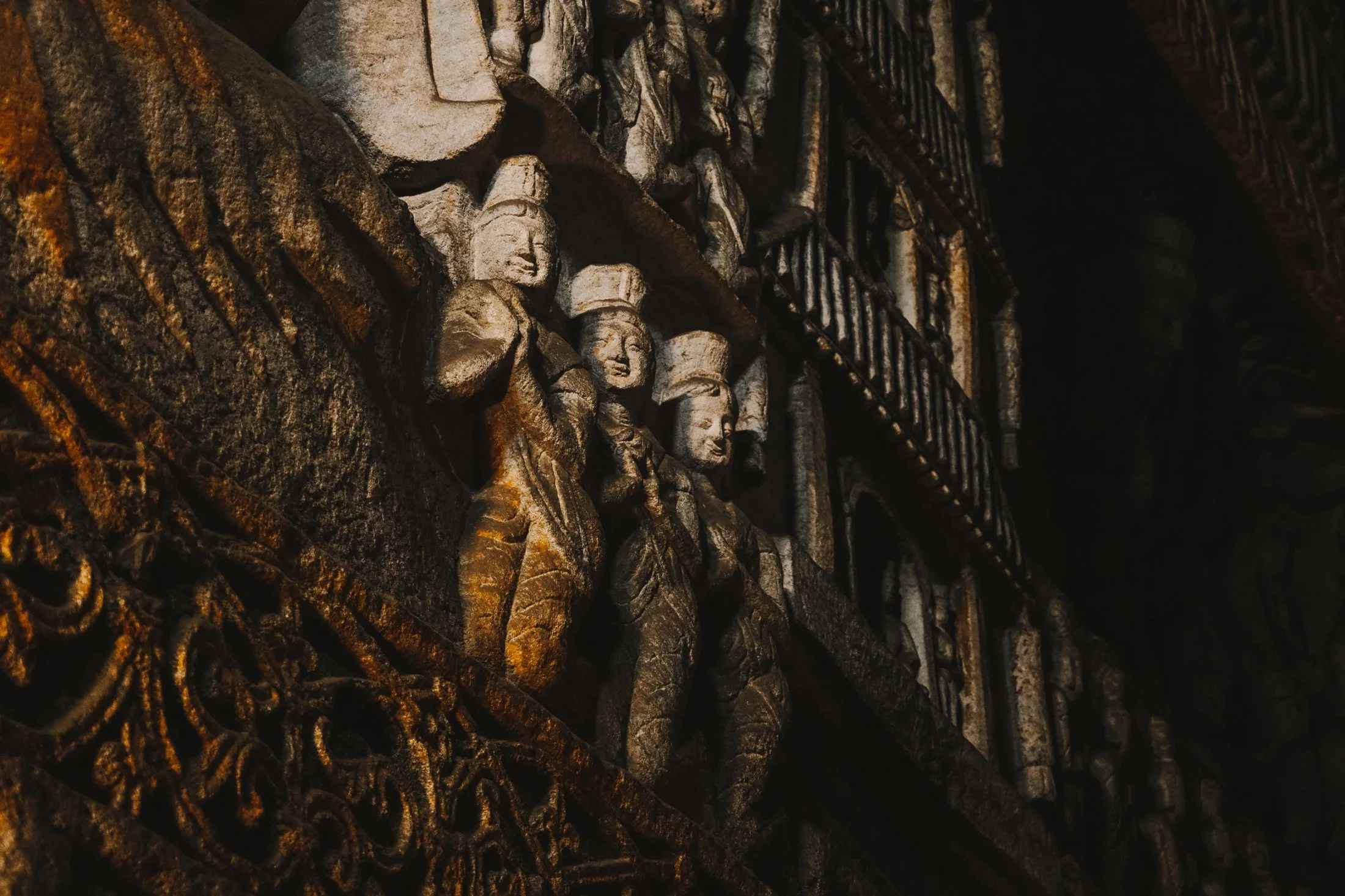
Begin with a face, then let the surrounding surface come into view. In Eric Prouzet’s photograph, two carved figures sit beneath densely worked halos, their robes falling into repeated folds. Traces of colour remain among the forms. Wang Qihang’s darker image draws attention to a sequence of smaller figures and the depth of their niches. Neither photograph needs a game character superimposed on it to hold the eye.
For a visitor interested in art, the reward lies in these changes of scale: a large presence within a cave, a small figure beside it, a pattern that joins one surface to another. The history of exchange adds a further layer. Yungang belongs to a story of ideas moving across regions and finding new form in stone. Source.
A different rhythm in timber
Yingxian Wooden Pagoda (应县木塔), in Ying county, offers a further chapter for travellers drawn to architecture. Also known as the Sakyamuni Pagoda of Fogong Temple, it was built in 1056 during the Liao dynasty. Its octagonal plan and timber structure invite a different kind of attention after the rock-cut spaces at Yungang. Source.
Look upwards from the roof edges to the clustered brackets beneath them, known as dougong (斗拱). The repeated elements make a structure that can be read in layers. This is an appealing continuation for someone whose interest has shifted from a striking image to the question of how it was made. Plan around the access actually available; do not assume a historic tower can be climbed. Source.
Give the journey a human scale
A first journey could give Yungang one unhurried day, then a separate day for the Hanging Temple and, if the transfers and access work, Yingxian. That is an editorial starting point, not a fixed package or a promise that every stop fits. Keep arrival and onward travel separate, check current reservations and photography rules, and leave room for a meal and a pause between sites.
For planning, remember that Shanxi is a different province from Shaanxi (陕西), where Xi’an and the Terracotta Army are located. The names look similar in English, but they lead to different journeys. Within Shanxi, choose a coherent group of places rather than trying to collect every location associated with the game.
The game may supply the first spark. What stays with you can be quieter: the interval between two rooflines, a robe carved into stone, the patience required to look closely. Shanxi offers that journey to players and non-players alike. The screen opens a door; the place deserves the time beyond it.
Before you travel
Which real places near Datong are linked to Black Myth: Wukong?
Datong’s culture and tourism bureau names the Hanging Temple and Yungang Grottoes among the game’s local source locations. This article focuses on their real architecture and art, rather than identifying individual levels or bosses.
How much time should I allow for this part of Shanxi?
Consider two full sightseeing days, with Yungang on one day and the Hanging Temple on another. Yingxian is a possible addition when transfers and current access allow. Arrival and departure travel need extra time.