By Off Path Now · Updated
A bridge that asks you to stop
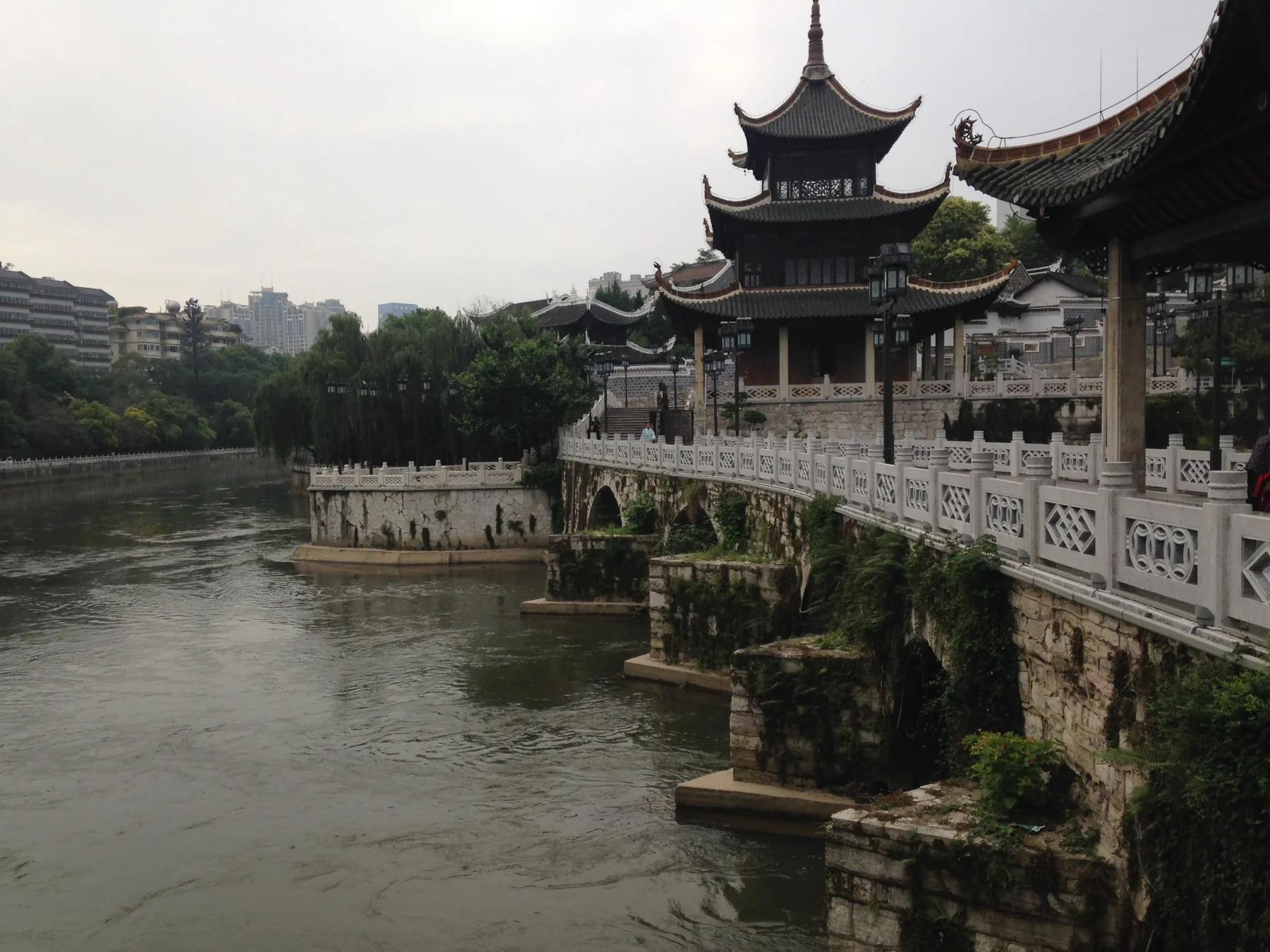
In Megan Judge’s photograph of Jiaxiu Tower, the Nanming River fills nearly half the frame. The pale railing runs from the foreground towards the pavilion, then the eye catches the dark roofs and, behind the trees, the blocks of modern Guiyang. Follow the railing back towards the camera and another detail comes into view: the stonework descends almost to the water. The tower belongs to the crossing as much as to the skyline.
Jiaxiu Tower began as a late Ming structure and has been rebuilt over the centuries. Guiyang’s Nanming District describes it as part of a group that includes Fuyu Bridge and Cuiwei Garden. That grouping explains something a close crop of the roof would lose. A bridge offers a way across the river. Here, the pavilion also gives people a place to look along it. The carved balustrade marks both the route and the pause.
Let the river set the scale
The photograph gives the modern city a place in the composition. Buildings are visible upriver, at a different scale from the arch and the pavilion. Looking from the bank, you can follow several lines at once: the near edge of the water, the sequence of stone arches, the ridges of the roofs. A short walk changes which of those lines leads the eye. It is a good reason to give the crossing a little time, even on a first afternoon in Guiyang.
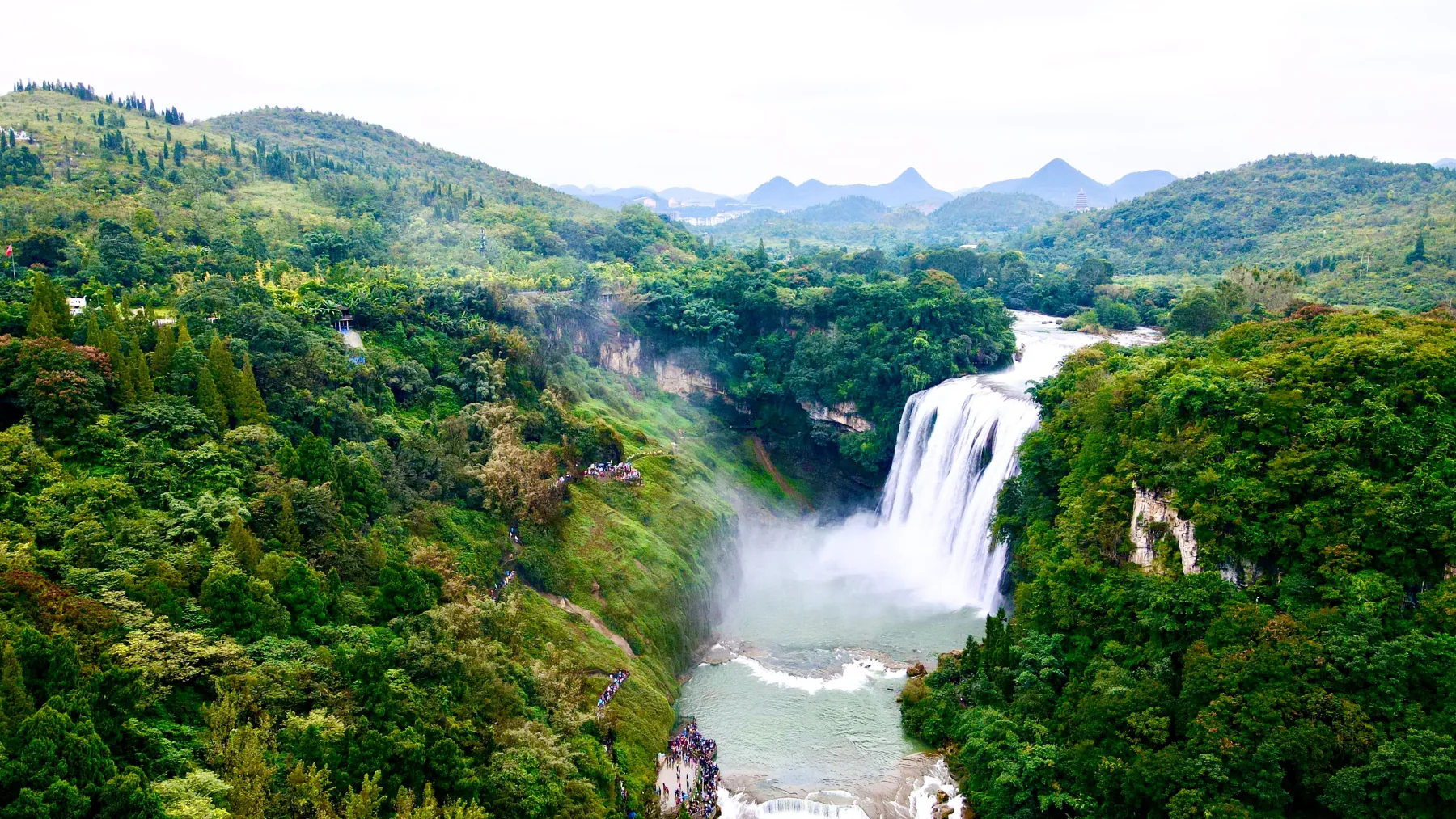
Huangguoshu, in the Anshun area, changes that sense of scale. The main waterfall lies on the upper Baishui River, in the Pearl River drainage basin. In Collins Zhao’s wide photograph, the river is visible briefly above the brink. The white fall draws the eye down, but the wooded slopes on either side and the pool below take up most of the image. Follow the water beyond the drop and the gorge becomes the subject.
What the cliff reveals
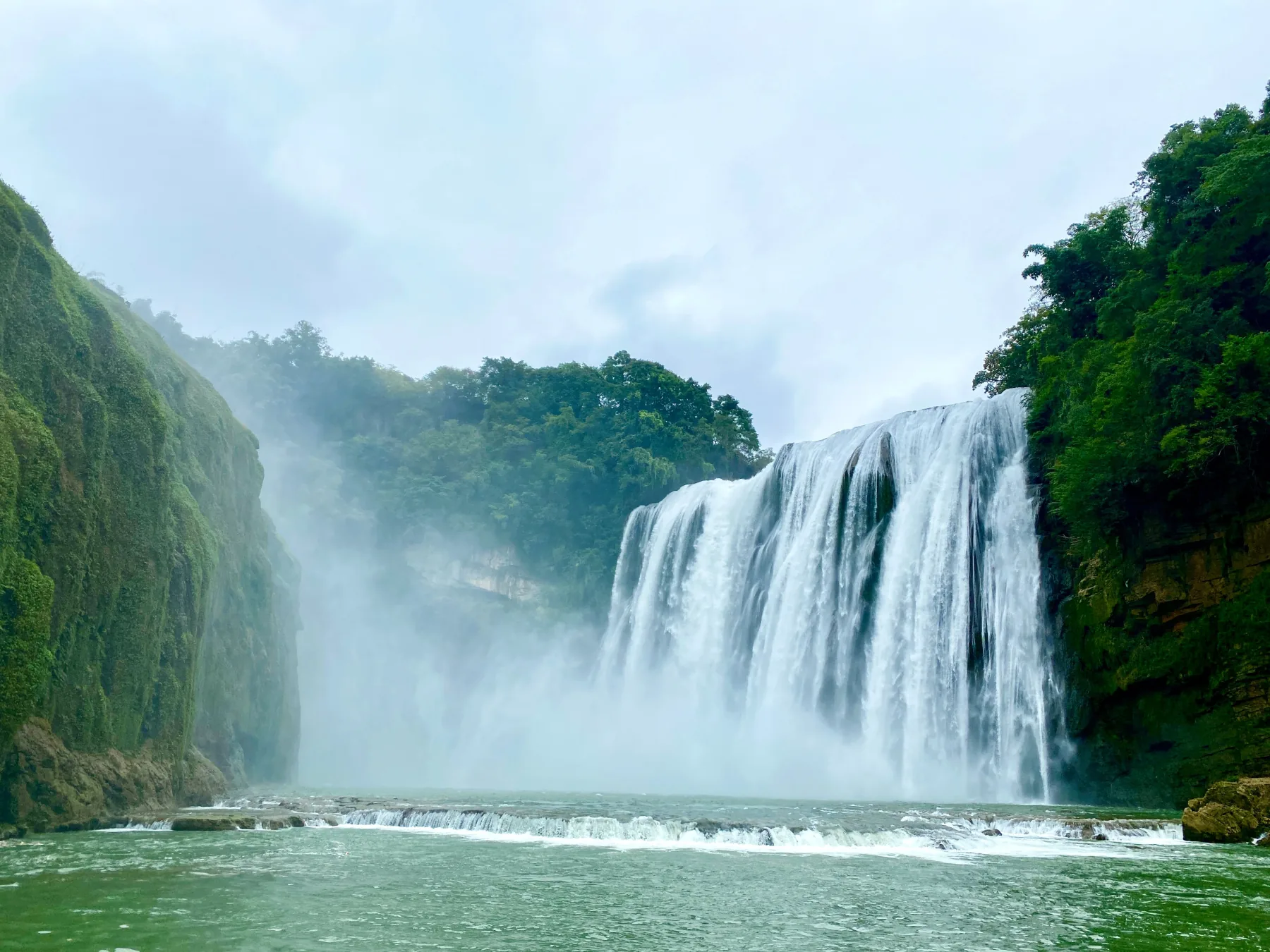
A study published in Acta Geographica Sinica reads Huangguoshu as a break in the river’s slope, at a transition between broader valleys upstream and more deeply cut terrain downstream. That helps explain why the view changes so much with distance. From above, the cliff is an interruption in a continuous valley. Near the base, the layers of falling water and the recesses between them come forward. The narrow white folds in the closer photograph make the cliff’s uneven face easier to pick out.
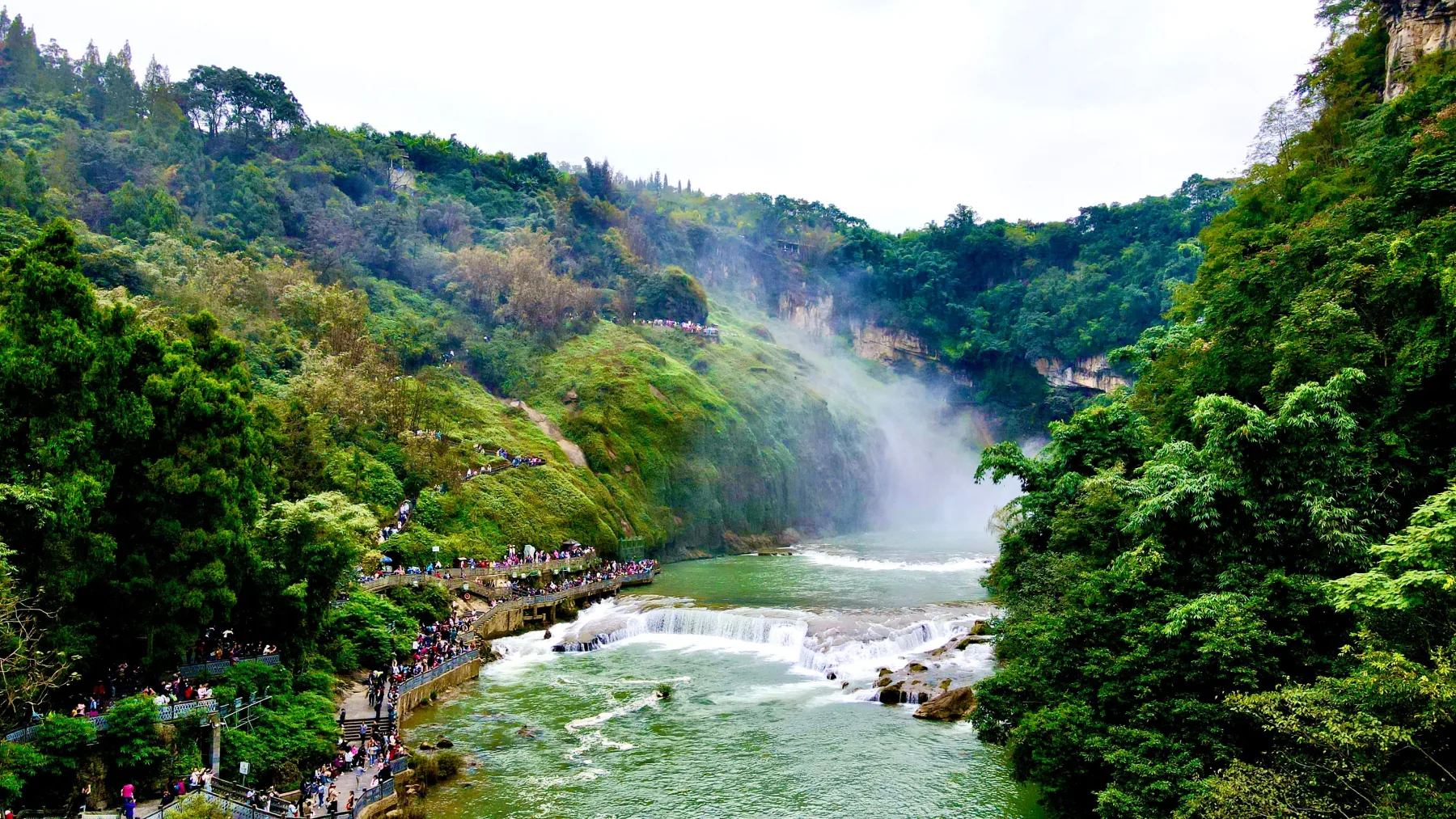
Water continues the work below. In a third view of the gorge, the main curtain is largely hidden by the trees and the angle of the camera. A line of foam crosses the river in the foreground, while mist rises further back. Look at the two photographs together: one gives you the vertical drop, the other shows where the water goes after it lands. Seen together, the photographs show how the shape of the river changes at the fall.
A view through the water
Behind the main fall is the Water Curtain Cave, or Shuiliandong. China’s Ministry of Culture and Tourism describes a 134-metre passage with openings looking out through the falling water. The relationship is almost the reverse of the one at Jiaxiu. At the bridge, the railing lets the eye travel out over the river. From a cave opening, water sits between the viewer and the gorge. Treat the passage as an optional part of the visit and check the scenic area’s current notice before setting out. Conditions and access can change.
The outward views already offer plenty to look at. Where the cliff is exposed between streams, compare its texture with the leafy slopes in the distance. Give each viewpoint enough time for your eye to adjust. The photographs record particular light and water conditions; the outline of the gorge offers a thread to follow in other conditions too.
Two stops, room to look
A Guiyang arrival and a separate outing to Huangguoshu give these places time to register on their own. Our six-day Guizhou itinerary shows how both can sit alongside Libo in a longer journey. At Jiaxiu, start with the shape of the crossing. At Huangguoshu, start with the valley around the fall. Each place reveals more once you look past the object that gives it its name.
Sources and further reading
Guiyang Nanming District · Jiaxiu Pavilion
Guizhou provincial portal · Jiaxiu Tower and its history
China Ministry of Culture and Tourism · Huangguoshu Grand Waterfall
Zhang and Mo · Origin and evolution of Huangguoshu Waterfall (1982)