By Off Path Now · Updated
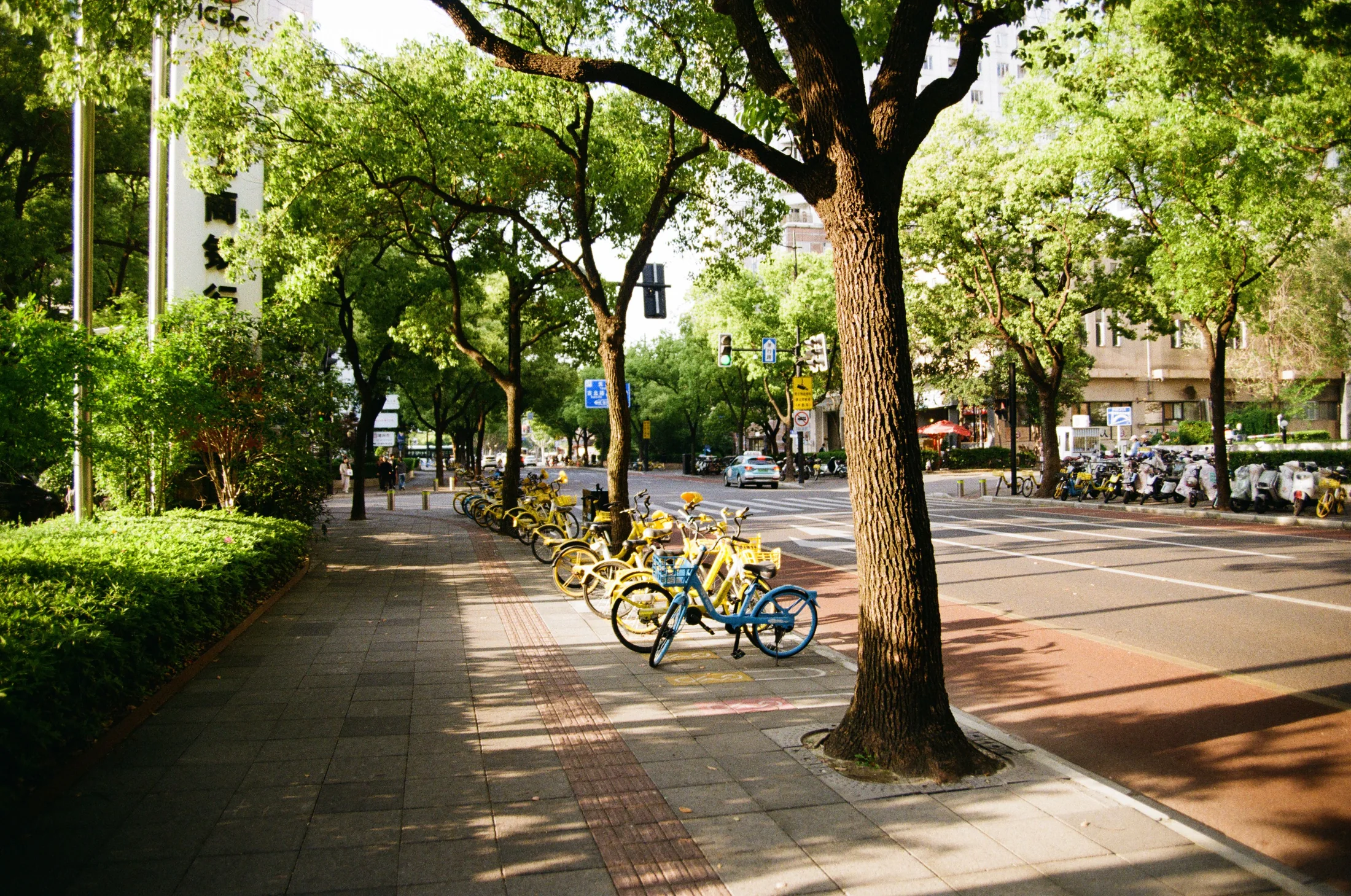
Parked bicycles make a small procession beneath the trees. Beyond the pavement, traffic moves through a strip of sunlight. This Shanghai street photograph offers a useful beginning for a day of eating: there is space between the meals, and that space belongs to the city.
Shanghai, on China’s east coast at the mouth of the Yangtze River, rewards an appetite for detail. A fried base, a folded wrapper, a bowl turned glossy with scallion oil: its familiar foods invite close attention. Give them separate moments, with a few streets to explore in between, and a food day becomes a way of noticing how the city lives.
Start with the crisp base
Shengjian (生煎) are pan-fried buns, commonly filled with pork. Their appeal starts underneath: a crisp base against softer dough. Shanghai’s official food guide distinguishes breadier versions without added aspic from soup-filled versions made with it. The same short name can therefore lead to noticeably different textures.
That variation is worth keeping in mind when choosing breakfast. Ask which style the shop makes, order for the appetite you actually have, and let the first serving be enough for a comparison. A bun does not need to become one stop in an eating marathon. Its contrast of crust and filling is already something to spend time with.
Make time for a small steamer
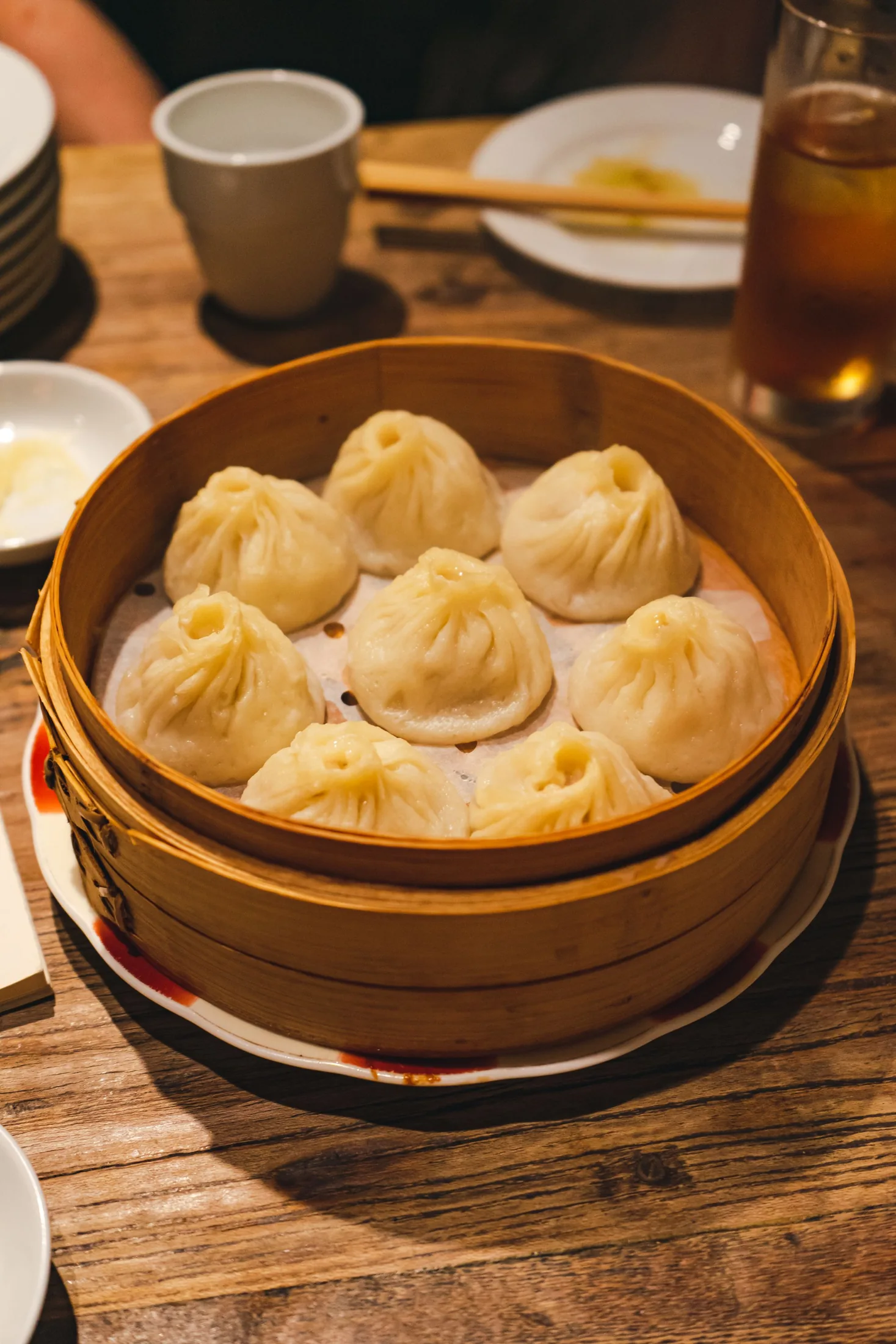
Xiaolongbao (小笼包) change the emphasis from the pan to the steamer. Nanxiang, in Shanghai’s Jiading district, is closely associated with these small soup dumplings. A thin wrapper encloses filling and hot broth; keeping them together is part of the craft. The illustration here shows the folded tops and the close arrangement inside a bamboo basket.
Move a dumpling carefully onto a spoon and let the contents cool before eating. The pause is part of the meal, rather than an inconvenience to hurry past. Look at the menu’s filling descriptions, too: pork is common, while some versions include crab. Different recipes call for different questions, especially if seafood or another ingredient is unsuitable.
A bowl of noodles, a different rhythm
Congyou banmian (葱油拌面), or scallion oil noodles, offer another way into Shanghai cooking. Noodles are tossed with aromatic scallion oil and soy sauce. Fried scallions give the bowl a darker, more concentrated note. Compared with a dumpling’s enclosed filling, the preparation puts its sauce openly around the noodles.
A modest noodle lunch leaves the afternoon flexible. It can follow a museum visit or precede a walk, without demanding a whole programme around it. Do ask about the actual recipe: Shanghai’s official preparation notes include versions with dried shrimp, so a simple-looking bowl should not automatically be treated as vegetarian.
Read the city at pavement level
Between meals, bring your attention down from the skyline. In the Cathay Cinema photograph, a vertical sign rises above a lower entrance canopy; cars pass in front of the building. The cinema stands on Middle Huaihai Road. Its presence gives a street walk a cultural reference beyond the shops, without requiring a visit inside.
For a separate neighbourhood walk, Yuyuan Road’s historic blocks offer another setting for looking at buildings and street life. Yuyuan Road (愚园路), west of the central shopping streets, is distinct from Yuyuan Garden (豫园) in the old city. Their similar English names can lead a visitor towards quite different parts of Shanghai.
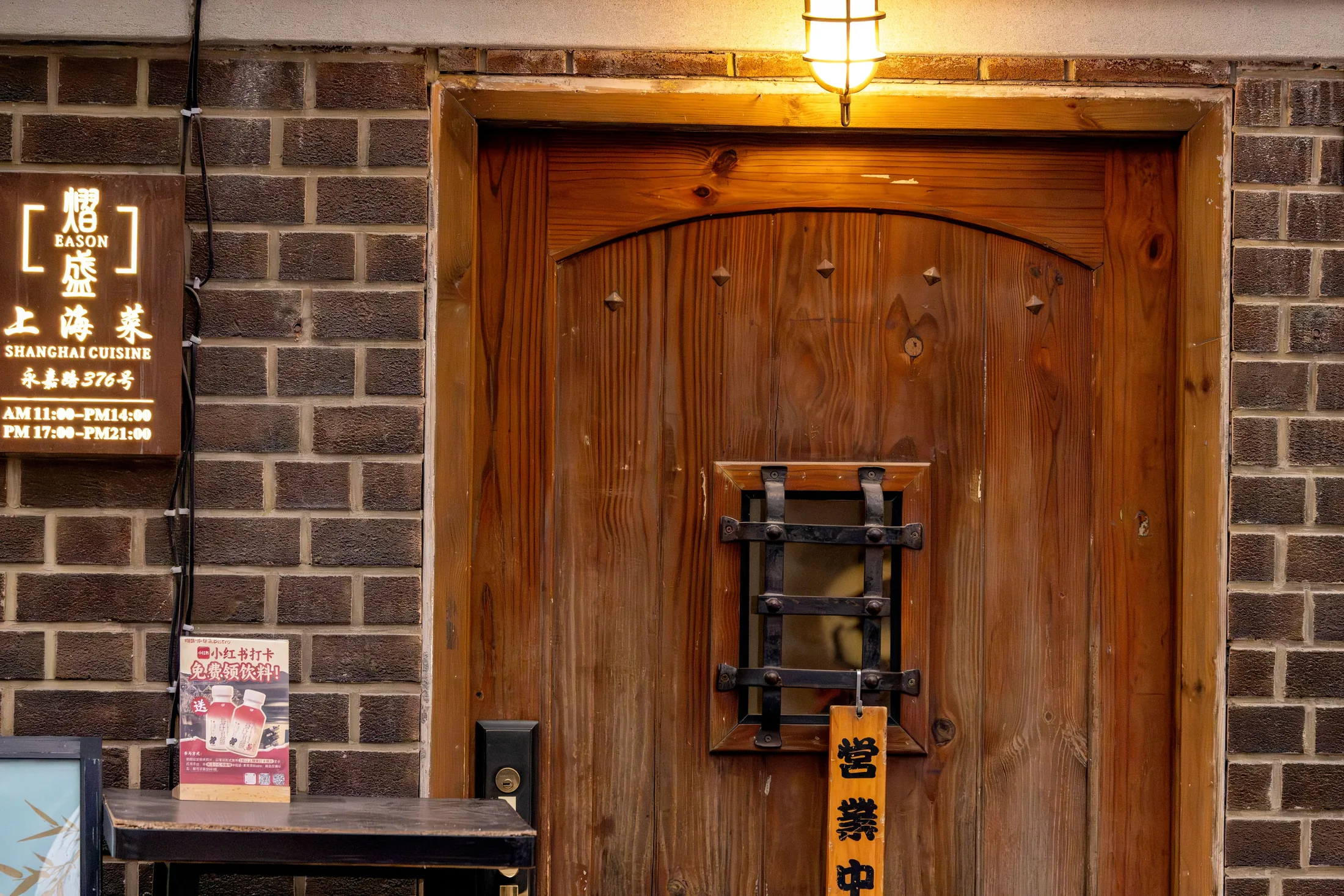
Choose one area for a given part of the day. These locations and the restaurant doorway pictured here are observations across Shanghai, not consecutive stops on a single short walking route. A public pavement gives enough to look at: entrances, signs, windows and the changing distance between a building and the street. Homes and private courtyards remain private.

Leave the evening open
By evening, there is no need to keep sampling at breakfast’s pace. A seated dinner gives room for conversation and a fuller look at the menu. The warm wooden doorway in our photograph suggests this change of scale, from food carried through the day to a table around which the evening can gather.
For a private journey through China, this is a useful way to shape Shanghai: one food interest, one neighbourhood, and enough time for both. Check the chosen restaurant’s menu and arrangements when the plan becomes specific. The photographs are editorial context, not reviews or evidence of a meal taken at a named venue.
The day need not finish with every dish crossed off. It might leave a remembered texture, a cinema sign, or the light falling through a tree onto parked bicycles. Shanghai becomes more legible when the streets receive as much attention as the table.
How are shengjian and xiaolongbao different?
Shengjian are pan-fried buns with a crisp base; xiaolongbao are steamed soup dumplings. Fillings and dough vary, so ask about the version being served.
Can these streets be visited as one short food walk?
This article brings together food and street scenes from several parts of Shanghai. Choose a district around your meals and allow for transfers; the photos do not document one continuous route.
Shanghai, between the river and the lanes · Plan your China journey
Photography: IcyPomeloAllen, Julias Torten und Törtchen and Yudi Ding / Pexels, used under the Pexels License. Food photograph used as an illustration; no restaurant endorsement is implied.
Sources and further reading: 1 · 2 · 3 · 4 · 5 · 6 · 7. 2026-10-19.