
By Off Path Now · Updated
A few slices of duck, narrow strips of vegetables and a little dark sauce sit on a pale pancake. Beside them, a larger plate holds the ingredients still to be assembled. The photograph makes a useful introduction to Beijing’s best-known dish: the meal is completed in the hands of the person eating it.
Roast duck is an inviting place to begin, but a city’s food becomes more interesting when one famous dinner is allowed some company. A bowl of zhajiangmian, a shared pot of mutton and a walk between meals offer different rhythms. Rather than arranging Beijing around a list of dishes to collect, try giving each meal a different role in the day.
Begin with the pancake, not the photograph
Beijing roast duck, also widely called Peking duck, is commonly served with thin pancakes, sweet bean sauce, spring onion and cucumber. The contrast matters: rich duck against fresh vegetables, a little sauce against the soft wrapper. Start with a modest filling so that the pancake can close, then adjust the next one to your taste.
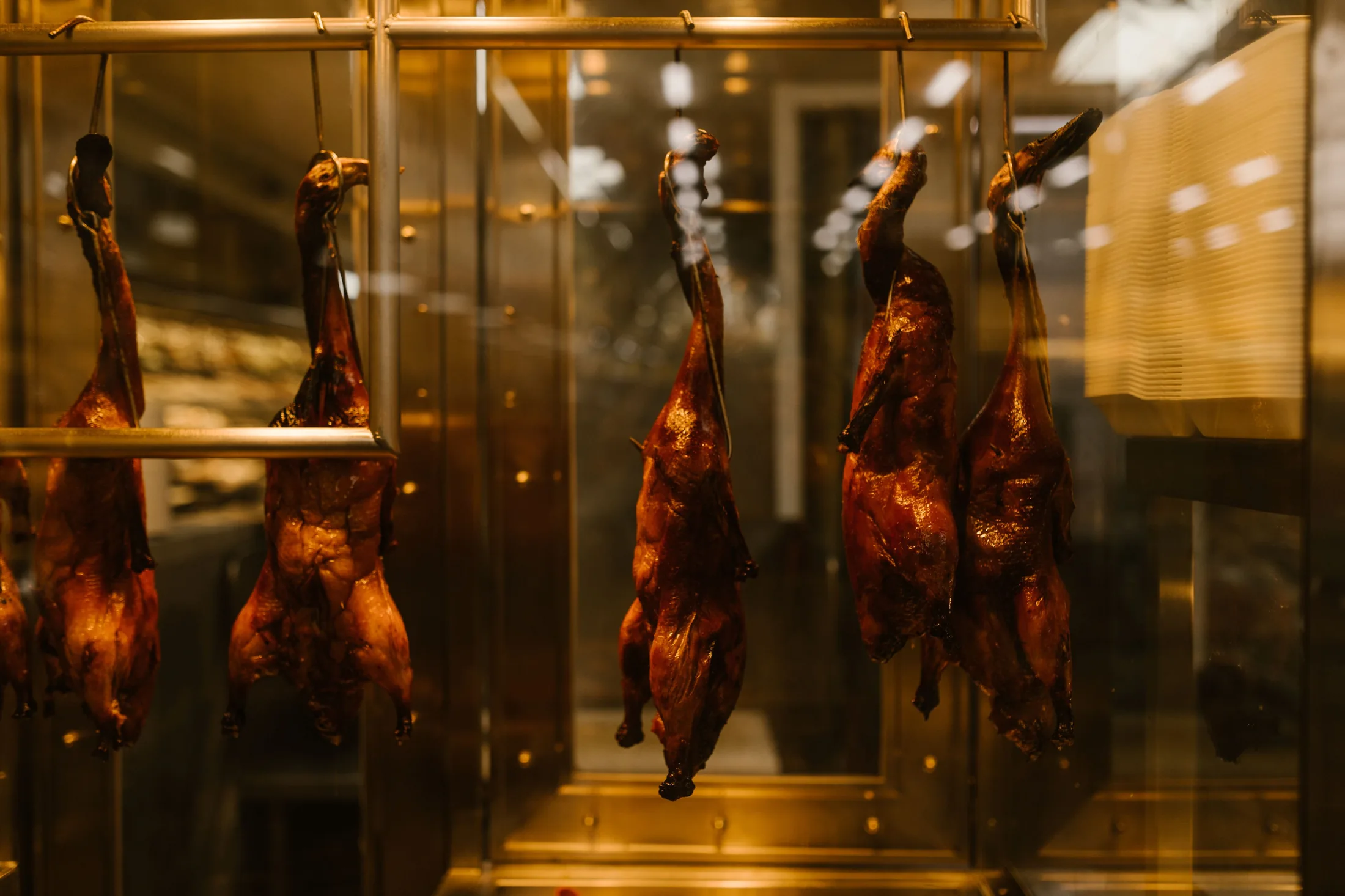
There is craft before the food reaches the table, too. Beijing’s official heritage publication describes Quanjude’s hanging-oven method using fruitwood, along with the importance of slicing. It is one named tradition, not a description of every roast duck kitchen. A display of hanging birds, including the illustration here, cannot on its own establish an oven type, recipe or restaurant location.
For a first visit, it is worth asking how the restaurant serves its duck and what the order includes. That conversation is more useful than assuming every meal follows the same sequence. Let the dish occupy an unhurried dinner, with enough room to notice its preparation and the small choices involved in assembling each pancake.
Give a bowl of noodles its own meal
Zhajiangmian offers a change of scale. Beijing’s official food pages describe wheat noodles with fried bean sauce and vegetables. Where a duck meal unfolds across several components, a bowl of noodles brings them into a more compact arrangement. The interest lies in how the sauce and vegetables meet the noodles as they are mixed.
This is a good candidate for a separate lunch, rather than another course added to a large duck dinner. Keep the Chinese name, 炸酱面, alongside the English one when looking at menus. Variations belong to the dish; the name alone does not tell you every ingredient. If you need a vegetarian version or have dietary restrictions, ask the kitchen about the actual preparation.
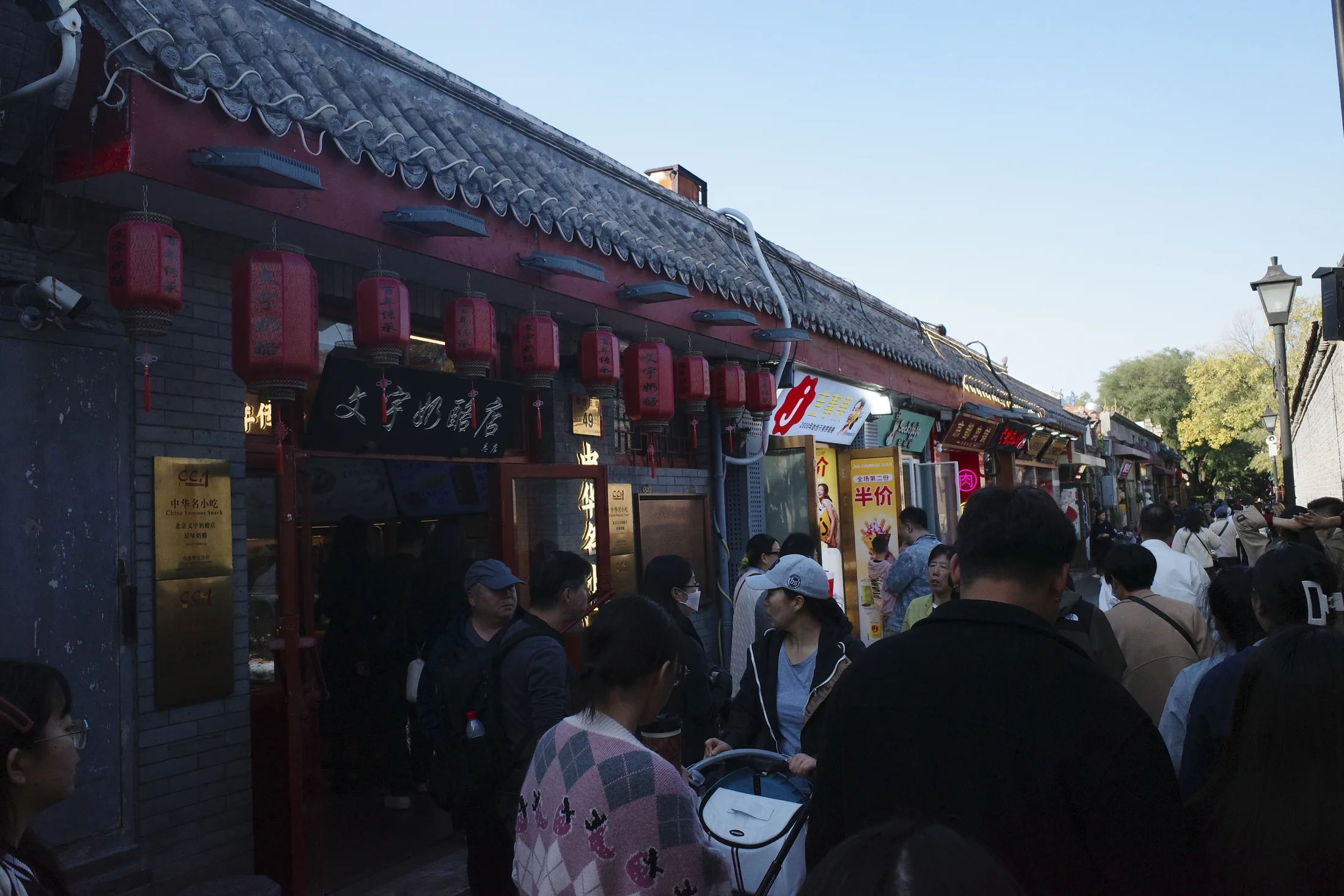
A Beijing government feature places a zhajiangmian eatery in Fangzhuanchang Hutong near Nanluoguxiang. It is a useful connection between a food tradition and a part of the city, rather than a guarantee about a particular shop today. The street photograph in this article shows Nanluoguxiang as it was photographed: lively, commercial and shared with many other visitors.
Let the copper pot set the pace
For a meal built around sharing, look to shuan yangrou, 涮羊肉. In the traditional Beijing style, a copper pot with a central chimney holds clear broth; slices of mutton are cooked at the table and paired with dipping sauce, often based on sesame. The cooking and conversation belong to the same gathering.
It makes a different occasion from a quick bowl of noodles. Choose ingredients together, ask the staff how to use the pot and follow their cooking guidance. A clear broth also does not mean that every sauce or accompaniment is mild. Tell the restaurant what you enjoy and what you cannot eat, instead of relying on a broad idea of what “Beijing food” should taste like.
Take the appetite back into the streets
A smaller sweet can change the register again. Tanghulu, 糖葫芦, is candied fruit on a stick; hawthorn is a classic version. Its hard sugar coating and tart fruit offer another sort of contrast after a savoury meal. Think of it as a possible stop during a walk, rather than something that must be fitted into every day.
The walk is part of this way of eating. Spend a little time looking at the shopfronts and the movement of the street, without expecting every lane to be a quiet residential scene. A busy food district and a restaurant table reveal different sides of the city. Neither needs to represent the whole of Beijing.
A food journey with room to breathe
On a private journey through China, Beijing’s meals can provide a useful counterpoint to museums and monuments. Keep one dinner for roast duck, another occasion for a shared pot, and a lighter meal for noodles. This is a way to vary the experience, not a fixed package or a promise of particular restaurants.
Leave the final choices open to the neighbourhood, the people travelling and their appetites. Confirm current menus and reservations when plans take shape; the photographs here are illustrations and earlier street views, not evidence of today’s service. What connects these meals is the time given to them: enough to make a pancake, mix a bowl and let a conversation continue.
What foods can introduce a visitor to Beijing?
Roast duck, zhajiangmian noodles and Beijing-style mutton hotpot provide three different meal formats. Tanghulu can add a smaller sweet stop.
Are the food photographs from specific Beijing restaurants?
No. The two roast-duck images illustrate the food; their photographed locations are unconfirmed. The Nanluoguxiang street photograph was supplied and identified by the owner.
Food photographs: Polina Tankilevitch and RDNE Stock project / Pexels, used under the Pexels License. Beijing street photograph: Off Path Now. No restaurant endorsement is implied.
Sources and further reading: 1 · 2 · 3 · 4 · 5 · 6. 2026-10-18.