By Off Path Now · Updated
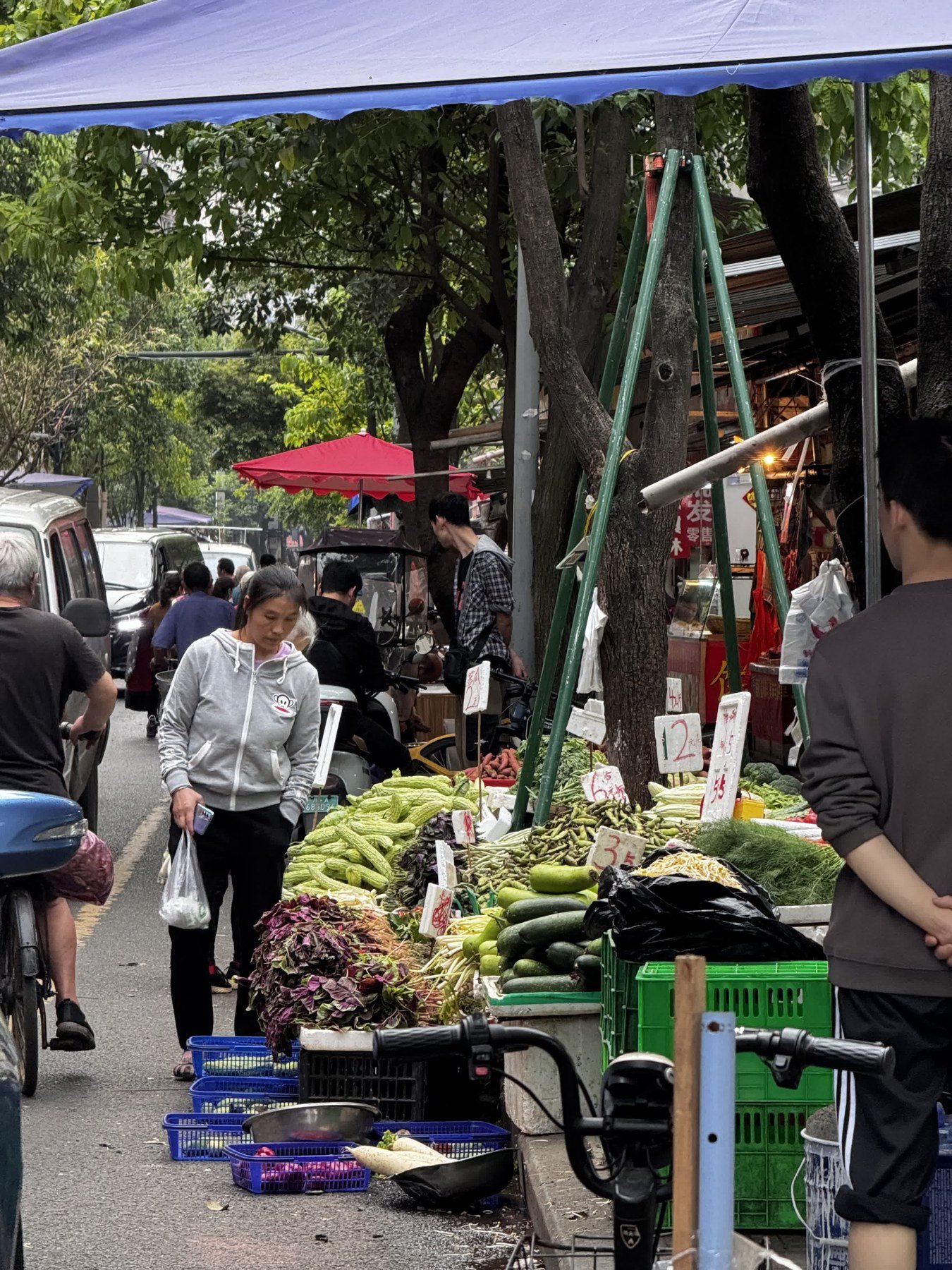
In the market street, the eye goes first to the trees. Their canopy stretches over bicycles, umbrellas and low tables of produce, giving the everyday business of shopping a setting that feels almost like a garden. A cyclist passes through the frame; someone stops by a stall. Nothing has been arranged for a visitor.
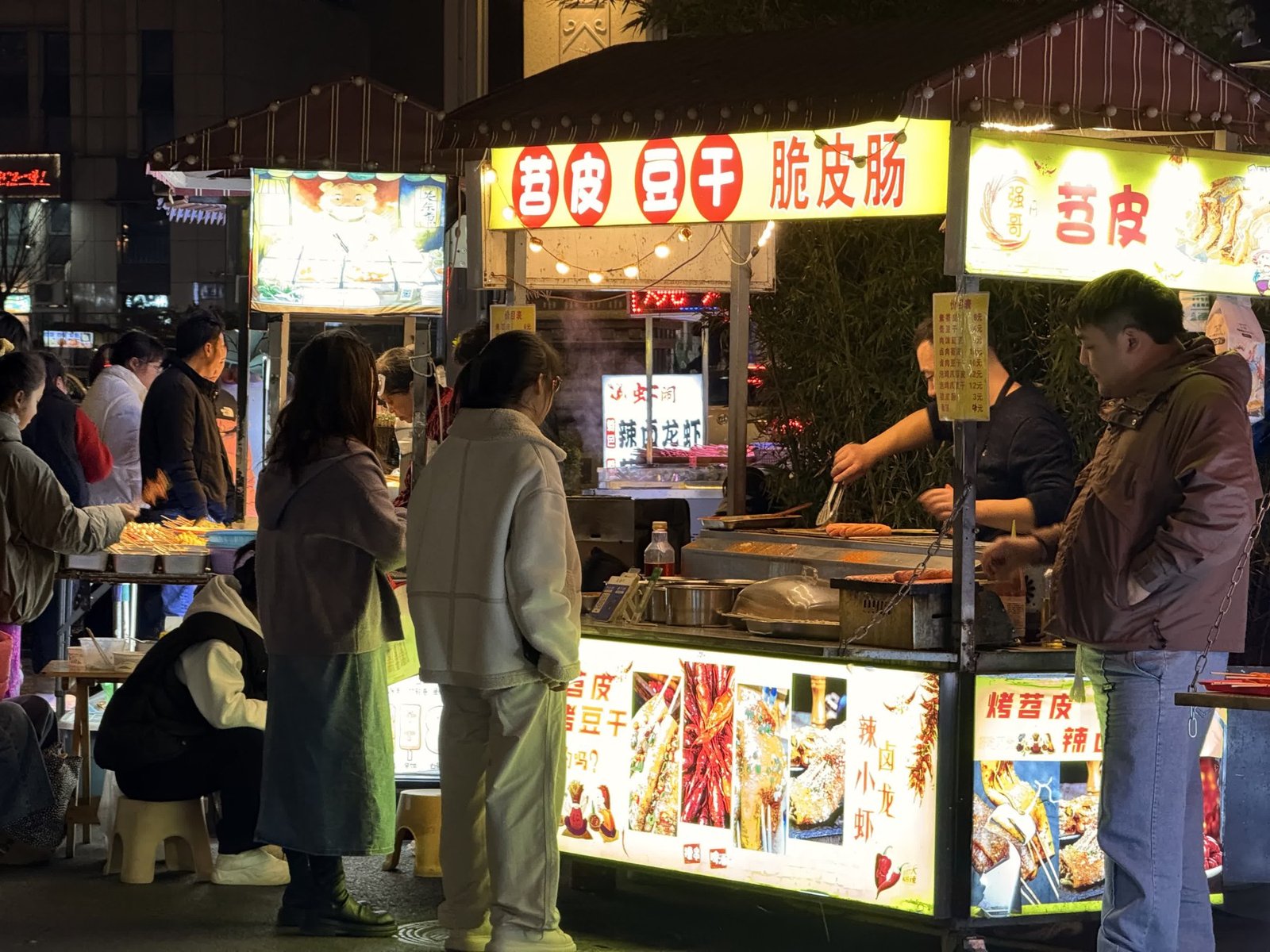
By evening, the palette has changed. Green shade gives way to glowing signs and stainless steel. At a food counter, the cook’s hands and the waiting bowls hold the attention. The city is still feeding itself, but now the preparation is part of the spectacle.
Between these two scenes lies a quieter way to discover Chengdu. Food is a taste of a place, certainly. It is also a way to see how the day is organised, where people pause, and how much of a city’s life takes place at the edge of a kitchen.
First, look at the market
A neighbourhood market offers the beginnings of a meal without showing its finished form. Vegetables lie in loose rows beneath umbrellas; baskets, small counters and the narrow passage between them create their own rhythm. Look closely and the interest moves from the whole street to the details: the shapes of the produce, the shade on a table, the brief space left for a bicycle.
For a traveller used to reading a destination through its monuments, this is a different scale of discovery. There is no single object to arrive at. The pleasure is in following a sequence of small observations and letting an ordinary place keep its ordinary purpose.
That requires a little restraint. Leave room for shopping and deliveries; ask before taking a close portrait of a vendor. The market need not become a backdrop for a performance. A few attentive minutes can reveal more than a hurried collection of photographs.

Flavour has more than one direction
Chengdu has belonged to UNESCO’s Creative Cities Network in the field of Gastronomy since 2010. Its official profile draws attention to a range of flavours: sweet, sour, bitter, spicy and salty. That breadth is a useful starting point for a visitor whose idea of Sichuan cooking begins and ends with chilli.
At a counter, the question can become more precise. What gives a broth its character? How will a vegetable be prepared? What texture are you drawn to? Looking at ingredients and asking about a dish shifts the experience away from a test of endurance and towards an appreciation of choices made in the kitchen.
Spice is one part of that conversation. Tell your planner what you enjoy and which ingredients you avoid before setting out. A kitchen’s ability to adapt varies, so preferences should guide the choice of places rather than become a promise about every stall.
After dark, follow the work of the kitchen
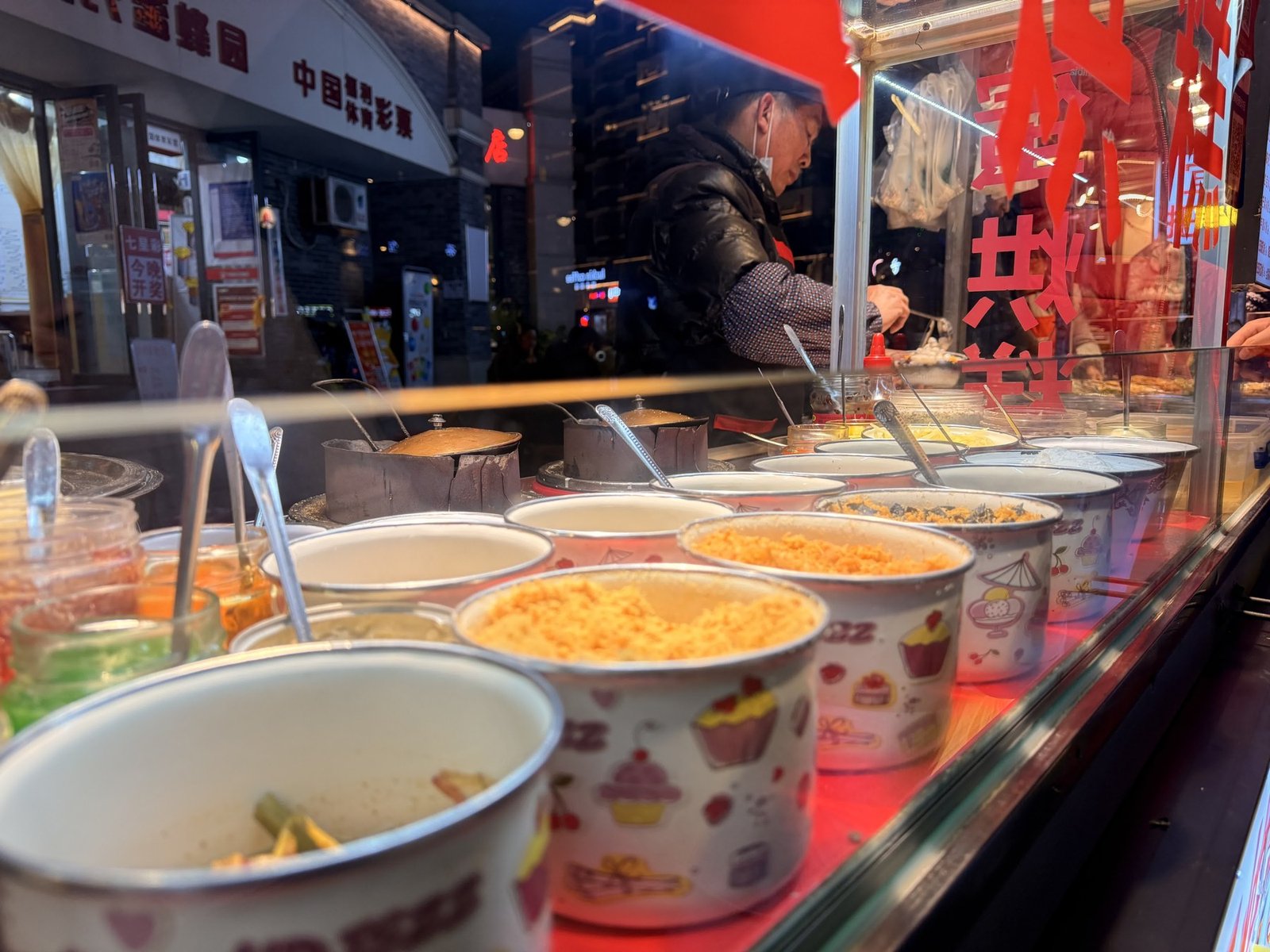
Our evening photographs bring the kitchen almost to street level. Bowls line the front of one counter; light falls across a work surface; signs compete for attention above the people waiting. A restaurant meal can hide the sequence between ordering and eating. Here, the sequence is often what holds the gaze.
It is tempting to turn a night market into a checklist of things to try. But the most satisfying evening may be the one with fewer stops: enough time to watch a preparation, taste something that interests you, then walk a little before deciding what comes next.
The contrast with the morning market is part of the pleasure. One shows ingredients waiting to become a meal; the other shows the last stretch of that transformation. Neither has to stand for the whole of Chengdu. Together, they give its food culture a human scale.
Make room for your own appetite
Keep some space around these experiences. A market walk can be followed by a quiet garden, a meal can stretch into conversation, and an evening need not be filled from its first hour to its last. Morning and night can belong to different days, leaving the city time to reveal other moods.
The photographs here come from our own library. They are particular moments rather than a fixed route; neighbourhood businesses, crowds and opening patterns change. The right setting for a visit should be chosen around your dates, where you stay and what you want to notice.
For Off Path Now, a private journey begins with those interests. Perhaps you want to understand ingredients, photograph the city after dark or simply eat at an unhurried pace. Tell us what draws you in, and we can discuss a Chengdu day with room for your own appetite.
Continue with Chengdu, One Street at a Time, or tell us about your journey.
A note on our sources
The UNESCO designation and flavour description were checked against its Chengdu profile. The suggestions above are our editorial approach to exploring the city, rather than a fixed or guaranteed food tour.